Find a Lawyer
Book an appointment with us, or search the directory to find the right lawyer for you directly through the app.
Find out more


Al Adalla
Read MoreA complete spectrum of legal services across jurisdictions in the Middle East & North Africa.


Financing the Fleet: The UAE’s Next Chapter as a Shipping Centre
 6 min 0 sec
Written by

 y.madkour@tamimi.com
 View LinkedIn Profile


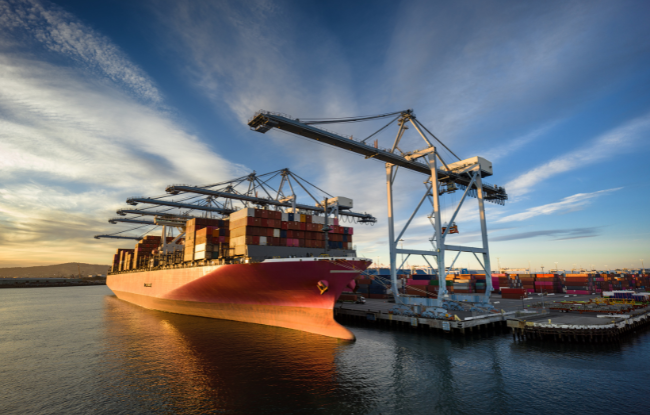
For years, the UAE’s maritime story has been told in cranes, terminals and containers. Its next chapter may be written in term sheets.
Cash remains important to Gulf shipping. Acquiring a vessel without financial covenants or lender approval still has obvious appeal, and no single dataset establishes a wholesale regional shift away from cash acquisitions. What is changing is the range of structures considered alongside equity: bilateral and syndicated loans, leasing, sale-and-leaseback and Shari’ah-compliant finance.
For a well-capitalised owner, the question is increasingly whether paying cash represents the most efficient use of capital. The UAE’s opportunity is to support that decision with financing options, effective security and dependable enforcement.
Capital as strategy
An equity-funded acquisition offers simplicity but concentrates capital in a cyclical, mobile asset. Conservative borrowing may preserve liquidity for another acquisition, unexpected off-hire or technical improvements required by charterers and regulators.
Properly structured finance can align repayments with earnings. It also introduces requirements that institutional financiers expect: documented ownership, appropriate insurance, valuations and clearer governance.
Our experience also suggests greater willingness among major regional energy, industrial and commodity counterparties to acknowledge charterparty assignments. Historically, obtaining those acknowledgements could be difficult, particularly from state-linked charterers with rigid contracting policies. Their acceptance helps lenders secure long-term charter income and makes financing easier to integrate into commercial arrangements.
The development is therefore broader than increased borrowing. It concerns owners’ ability to choose between forms of capital and build financing into their acquisition strategy.
A maritime framework for financed ownership
Federal Decree-Law No. 43 of 2023 concerning Maritime Law, effective from 29 March 2024, replaced legislation dating from 1981. It provides a framework more responsive to the separation between vessel ownership, investment, management and operation.
Registration provisions recognise qualifying UAE or GCC ownership links and links through an owner’s domicile, business centre or ship-management office in the UAE. Detailed eligibility, vessel-age and certification requirements still require transaction-specific review.
The law also provides for registration and mortgage of ships under construction. For lenders, however, the vessel is only part of the security analysis: shipbuilding contracts, refund guarantees and the buyer’s contractual rights remain important while construction instalments are being paid.
Article 48 is particularly significant. A mortgage may provide that the lender takes ownership of the mortgaged vessel or share following a payment default. If the debtor refuses delivery, the lender may seek a court order enabling takeover, which the statute contemplates within three working days. This takeover does not discharge other mortgages.
These provisions offer a statutory recovery route, but cannot eliminate competing claims. Crew wages, salvage, port charges and other preferred debts may affect recoveries. Due diligence must therefore extend beyond registration to the vessel’s trading, management, insurance and outstanding liabilities.
Registration and enforcement in practice
Administrative development matters because registration must work within a transaction’s closing timetable. The Ministry of Energy and Infrastructure publishes a mortgage-registration service for national commercial vessels, with a fee of AED2,500 and an expected completion time of one day. Documentary requirements and the service’s availability should be confirmed before closing.
The Maritime Bundle, launched in December 2025, brings together 28 maritime services through an integrated digital platform. Such developments can support coordination between registration, payment and delivery, although closing arrangements must reflect actual registry procedures.
Enforcement remains the other half of the analysis. The Maritime Law recognises mortgage-secured claims as maritime debts for arrest purposes and provides mechanisms for arrest and release against approved security. The practical value is clear: a vessel can leave the jurisdiction overnight.
The UAE has no separate specialist admiralty court, and maritime disputes generally proceed before the ordinary judiciary. Lenders must consider local procedure, translation, preferred claims and the interaction between arrest, judicial sale, insolvency and arbitration. Consistent court and registry practice will be as important as statutory reform.
English-law documents and UAE collateral
English law will remain familiar for facility agreements, guarantees, intercreditor arrangements and assignments. That familiarity does not displace the law governing the asset.
The proprietary effect and registration of a mortgage over a UAE-flagged vessel fall within the UAE maritime regime. Security over shares, accounts and receivables may depend on the jurisdiction of the relevant company or asset. Enforcement against a ship in a UAE port engages the competent UAE court.
A financing may therefore combine an English-law facility, a UAE-law ship mortgage and corporate security within a financial free zone. Each component needs its own analysis of creation, perfection, priority and enforcement. A coherent document suite must connect those components.
Bareboat registration offers additional flexibility for leasing and structured finance. Qualifying foreign vessels may enter the UAE register for the charter period, while UAE-registered vessels may obtain permission to fly another state’s flag during a bareboat charter-out.
This is sometimes called “dual flagging”, but a ship cannot operate under two nationalities simultaneously. Registry compatibility, suspension arrangements and mortgagee consent require attention. Existing rights in rem must also be addressed before charter-out permission is granted.
Islamic finance as a home-market advantage
Islamic finance provides another substantial pool of capital. An ijara structure may place vessel ownership with a financier or financing vehicle, leasing its use to the operator with separate arrangements for a later title transfer. Murabaha and co-ownership structures may also be relevant, depending on the transaction.
These structures require more than replacing conventional lending terminology. Ownership risk, major maintenance, insurance or takaful, purchase undertakings and late-payment treatment must reflect the chosen structure and applicable Shari’ah requirements.
Insurance deserves early attention. A financier’s requirements may extend to the vessel’s cover, creating practical questions where the owner relies on conventional hull or P&I insurance. Acceptability should be established with the financier’s Shari’ah advisers before commercial commitments are made.
Islamic and conventional funding can also coexist, but intercreditor rights, payment waterfalls, enforcement and total-loss consequences require careful coordination. The UAE’s advantage lies in combining maritime security with an established Islamic-finance ecosystem.
Free zones and the wider financing structure
ADGM and DIFC can provide corporate and financing infrastructure around the vessel. Their role complements the federal maritime register.
ADGM’s common-law framework and special-purpose vehicles can support appropriate passive ownership and holding structures. Its corporate charges register supports security at company level. The suitability of an SPV as owner, lessor or holding company depends on its permitted activities and the transaction.
DIFC’s Prescribed Company regime offers another passive holding or structuring vehicle. Amendments enacted on 24 July 2026 broadened access while strengthening the role of Corporate Service Providers. DIFC’s 2024 Law of Security also modernised its framework for security over relevant corporate collateral.
The distinction is important: a maritime mortgage secures the ship, while corporate arrangements may secure shares, accounts, receivables and contractual rights. Incorporating a vessel-owning entity in a financial centre does not replace ship-registration requirements or maritime priority rules.
Operational zones contribute differently. Dubai Maritime City supports maritime businesses through repair, lifting, berthing and related facilities. JAFZA connects operating companies to Jebel Ali’s port and logistics ecosystem.
The 2025 cooperation framework between JAFZA and DIFC points towards a useful division: operations close to the port, with holding or financing arrangements in a financial centre where appropriate. The structure should follow the business, with each entity’s functions and security clearly defined.
Written by
The opportunity is for the UAE to become a centre where maritime assets are owned, financed, secured and recycled into the next generation of the fleet.
The next stage
The UAE already combines ports, owners, operators, capital and global trading links. Its modern Maritime Law, developing digital services, Islamic-finance capacity and financial free zones strengthen the foundations for a broader ship-finance market.
The next test is implementation: predictable registration during closing, workable leasing structures, clear treatment of competing claims and timely enforcement. Coordination between federal, emirate-level and free-zone authorities remains essential.
Owners and financiers should assess those practical questions alongside pricing and leverage. The strongest transaction is one whose ownership, security and recovery arrangements remain coherent when the commercial relationship comes under pressure.
Cash has not left the room. It is being asked to work harder. The opportunity is for the UAE to become a centre where maritime assets are owned, financed, secured and recycled into the next generation of the fleet.
Next Article