


Find a Lawyer
Book an appointment with us, or search the directory to find the right lawyer for you directly through the app.
Find out more



Al Adalla
Read MoreA complete spectrum of legal services across jurisdictions in the Middle East & North Africa.


Maritime Route Disruption: Contractual Risks and Remedies under Saudi Law
 5 min 39 sec
Written by

 a.hashem@tamimi.com
 View LinkedIn Profile

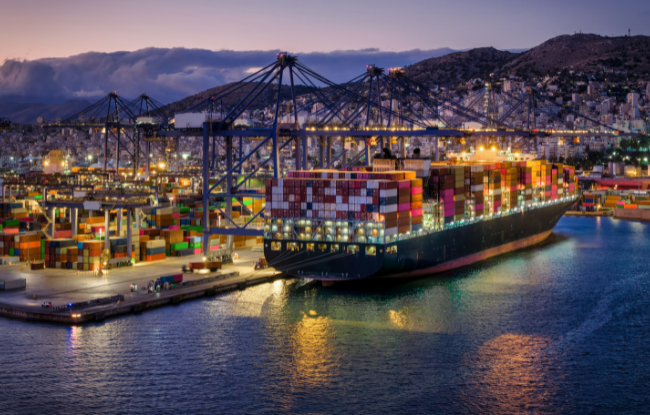
Recent disruption affecting key maritime routes has highlighted the legal and commercial risks that can arise when established shipping routes become unavailable, restricted or commercially impracticable.
The Strait of Hormuz and Bab el-Mandeb are among the world’s most significant maritime routes, connecting major regional markets with international shipping networks. Disruption affecting navigation through these waterways can have consequences extending across global supply chains, including delays, increased freight and insurance costs, alternative routing requirements and potential difficulties in performing contractual obligations.
From a legal perspective, such disruption raises important questions for businesses involved in international trade and transportation. Who bears the additional cost of rerouting? Does the disruption trigger a contractual force majeure clause, make performance impossible under Article 110 of the Saudi Civil Transactions Law, or qualify as exceptional circumstances under Article 97? Can contractual performance be suspended or terminated? Will marine or war-risk insurance respond? Which law governs the dispute, and what remedies may be available?
The answers will depend on the contractual arrangements, governing law and particular circumstances affecting performance. Where Saudi law governs the relevant contractual relationship, the Saudi Civil Transactions Law provides an important framework for distinguishing between circumstances in which performance becomes impossible and those in which performance remains possible but becomes excessively onerous.
When a maritime disruption becomes a contractual issue
International law recognises navigational rights through straits used for international navigation, subject to the applicable legal framework. However, the existence of a legal right of passage does not necessarily mean that a route will remain practically or commercially viable during periods of heightened security risk.
Security risks, navigation restrictions, increased war-risk insurance premiums and decisions by shipowners to avoid certain waters may render a route commercially impracticable, even where a legal right of passage remains.
For businesses, these disruptions quickly become contractual issues. A single shipment may involve a sale contract, a charterparty, a bill of lading and an insurance policy. Each contract may allocate disruption consequences differently and be subject to different governing laws or dispute resolution processes.
Where does the risk fall when a maritime route is disrupted?
The impact of a disruption may vary across the different contractual relationships involved.
It is essential to identify the specific obligation affected and how the contract allocates the relevant risk. Provisions on force majeure, hardship, war risks, unsafe ports, deviation, sanctions, additional delivery costs, and termination can significantly affect the outcome.
Where Saudi law applies: impossibility or exceptional circumstances?
For example, a supplier may agree to deliver goods using an established shipping route. If a disruption makes that route unavailable or commercially impracticable, an alternative may still be available, but at a significantly higher cost.
Whether such circumstances entitle the supplier to suspend or cease performance will depend on the contractual terms and the applicable legal framework. Where Saudi law applies, the distinction between impossibility and excessively onerous performance becomes particularly important.
The Saudi Civil Transactions Law, issued by Royal Decree No. M/191 dated 29/11/1444H, draws a distinction between circumstances that make an obligation impossible to perform and circumstances that leave performance possible but make it excessively onerous.
Article 110 addresses the consequences of impossibility of performance. Where performance of an obligation under a bilateral contract becomes impossible for a reason beyond the debtor’s control, the affected obligation and the corresponding obligation are extinguished. Where the impossibility affects the entire obligation, the contract is automatically terminated. Article 110 also addresses partial impossibility and temporary impossibility in time-based contracts, with different consequences from those arising where the entire obligation becomes impossible.
This is an important threshold; increased expense, delay or operational difficulty does not necessarily amount to impossibility.
Where an alternative route, port or mode of transport remains available and permits performance of the obligation as contractually agreed, disruption of the original route may not amount to impossibility. The assessment will depend on the precise obligation, including any agreed requirements concerning the route, destination, mode of transport and delivery deadline. Relief based on impossibility may therefore not be available merely because the original method or route of performance has been disrupted. Any contractual force majeure provisions should, however, be considered separately in accordance with their terms.
When performance remains possible but becomes onerous
In cases where performance is still possible, Article 97 of the Civil Transactions Law can become especially important.
Article 97 applies where exceptional circumstances of a public nature that could not have been foreseen at the time of contracting make performance of a contractual obligation excessively onerous for the debtor such that it threatens the debtor with substantial loss.
In such circumstances, the debtor may invite the other party to renegotiate the contractual obligation without undue delay.
This provision does not grant an immediate right to suspend performance. The law states that requesting negotiations does not relieve the debtor of the obligation to continue fulfilling contractual duties.
If negotiations do not produce an agreement within a reasonable period, the court may adjust the onerous obligation to a reasonable level, taking account of the circumstances and balancing both parties’ interests. Any agreement contrary to Article 97 is void.
Accordingly, where performance remains possible through an alternative route but at a substantially increased cost, the analysis may shift from impossibility under Article 110 to whether the requirements of Article 97 are satisfied.
Who bears the additional cost?
When an alternative route is available, the focus shifts to the additional costs of using it.
The allocation of these costs will depend on the relevant contractual arrangements. A sale contract may allocate freight and delivery costs between the buyer and seller, while a charterparty may address deviation, additional voyage expenses and war-risk premiums. A bill of lading may separately govern the carrier’s rights and liabilities in relation to the cargo interests.
The relevant question is not only who initially pays the additional cost, but also whether that party is contractually obligated to bear it or entitled to recover it from another party.
Will insurance respond?
Insurance introduces an additional layer of complexity to the analysis.
Marine insurance arrangements may provide separate cover for the vessel, cargo, third-party liabilities and war risks. Whether a particular loss is covered will depend on the terms of the relevant policy, including any war-risk cover, exclusions, geographical limits, notification requirements and provisions relating to delay or additional expense. Physical damage arising from a security incident, for example, may be treated differently from losses arising solely from delay, rerouting or increased operating costs.
What alternatives are available?
The availability of alternative performance is relevant from both a commercial and legal perspective. Where an alternative route, port or mode of transport remains reasonably available, the disruption of the preferred route may not necessarily make performance impossible. However, alternative performance may result in additional cost, delay or operational risk, requiring consideration of how those consequences are allocated under the relevant contracts.
Written by
The relevant question is not only who initially pays the additional cost, but also whether that party is contractually obligated to bear it or entitled to recover it from another party.
What practical steps should businesses consider?
Businesses exposed to maritime route disruption should review the entire contractual chain before determining their legal and commercial response.
The first step is to identify the affected obligation and examine how the relevant contract addresses matters such as war risks, force majeure, hardship, deviation, insurance and additional transport costs. Businesses should then assess whether performance has become impossible or whether an alternative method of performance remains available and, if so, the legal and commercial consequences of that alternative.
Relevant insurance policies should also be reviewed, particularly in relation to war-risk exclusions, geographical limits, notification requirements, cancellation provisions and additional premium requirements. Businesses should retain evidence of additional freight, insurance, storage and logistics costs and ensure strict compliance with applicable contractual notice requirements.
Where contractual performance remains possible but has become excessively onerous, consideration should also be given to whether Article 97 may apply where Saudi law governs the relevant contract, including the option of promptly requesting renegotiation under Article 97.
Conclusion
The legal consequences of maritime route disruption extend beyond the immediate question of whether vessels can continue to use a particular route.
Such disruption may affect the allocation of rerouting costs, the continued enforceability and performance of contractual obligations, the availability of insurance coverage and the ability of parties to recover resulting losses. The applicable governing law and dispute resolution mechanism will also be central to determining the parties’ respective rights and remedies.
For businesses, determining the appropriate legal and commercial response requires careful consideration of the relevant contractual obligations, governing law, available alternatives, insurance arrangements and allocation of risk.
For further information, please contact Ahmed Hashem, Partner and Head of Transport – KSA at a.hashem@tamimi.com or Albatoul AlGhalib, Associate, Transport & Insurance, Al Tamimi & Company, at a.AlGhalib@tamimi.com.
Next Article