



Find a Lawyer
Book an appointment with us, or search the directory to find the right lawyer for you directly through the app.
Find out more


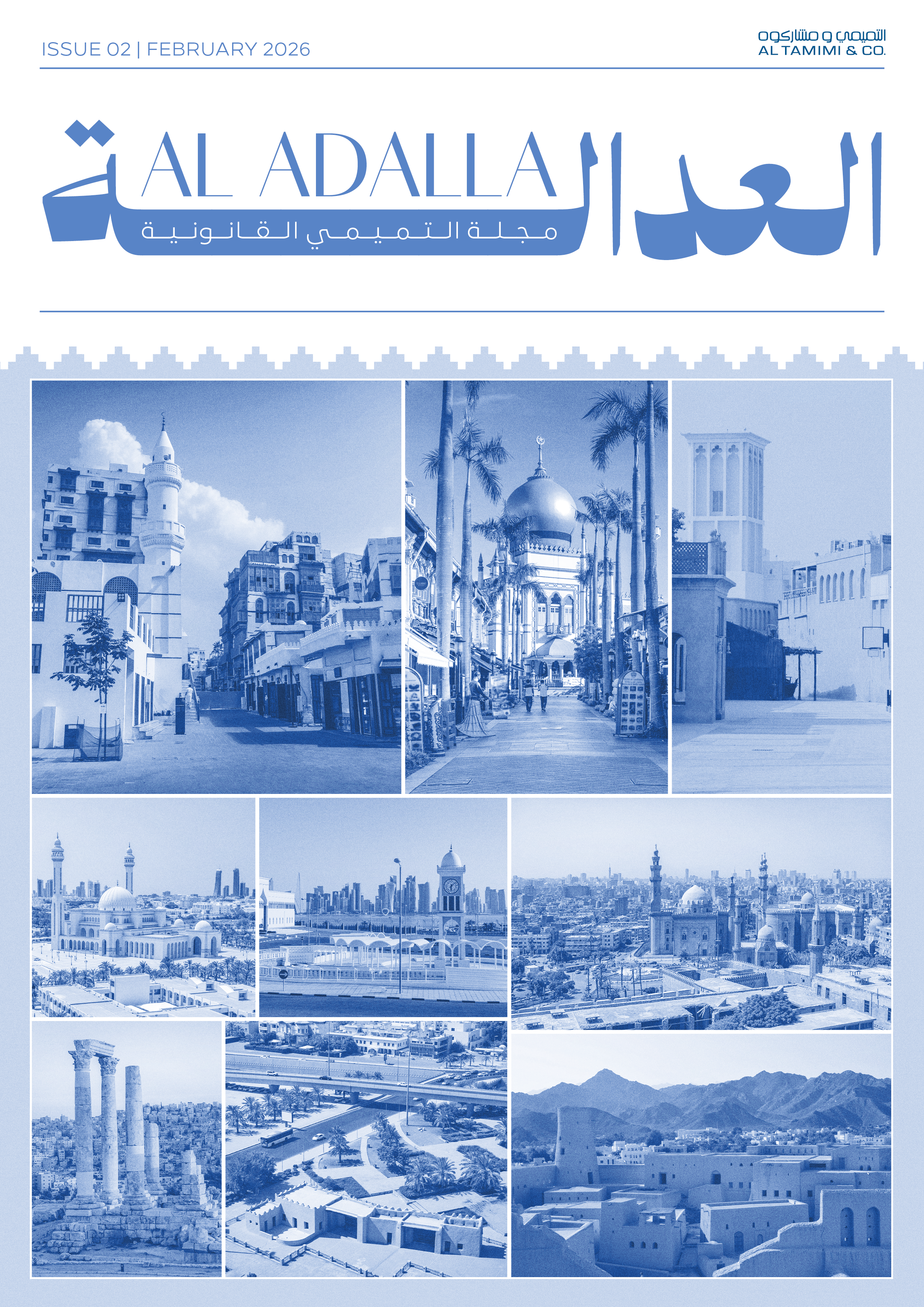
Al Adalla
Read MoreA complete spectrum of legal services across jurisdictions in the Middle East & North Africa.


Iraq Quality Mark: New Export Requirement
 4 min 11 sec
May 18, 2026 (Edited)
4 min 11 sec
May 18, 2026 (Edited)
Written by

 a.aldabbagh@tamimi.com
  View LinkedIn Profile
This article examines the significant transformation of Iraq’s product quality control regime in 2024, focusing on the Iraqi Quality Mark administered by the Central Organisation for Standardisation and Quality Control (COSQC). It traces the regulatory journey from an initial restrictive framework to subsequent reforms that ultimately reshaped the landscape for manufacturers seeking access to the Iraqi market.
The triggering decision and initial framework
The regulatory evolution was set in motion by the Iraqi Ministerial Council for Economy’s Decision No. 230339 Q, communicated through letter numbered 2311066 on 6 December 2023, which required manufacturers to obtain the Iraqi Quality Mark for specific electrical products imported into Iraq.
The initial scope was deliberately limited to six specific product categories:
- household storage electric water heaters;
- household electric room heaters;
- household electric refrigeration appliances (refrigerator, refrigerator-freezer, and freezer);
- household air conditioners;
- electric ovens; and
The deadline for compliance was set at 1 July 2024, after which regulatory authorities would take legal measures against violators.
The branch registration requirement
The initial regulatory framework imposed particularly onerous requirements on foreign manufacturers. The authorised company was required to have laboratories and offices outside Iraq accredited according to ISO 17025:2017 and owned offices accredited in inspection according to ISO 17020:2012.
More significantly, the Quality Mark Controls introduced a requirement mandating the submission of documents for registering the manufacturer entity with the relevant Iraqi official authorities, meaning registration in Iraq’s Companies Registrar.
The practical effect was that companies could only apply for the Quality Mark through an Iraqi branch, as applications through agents or distributors would not suffice. This interpretation required foreign manufacturers to establish a physical presence in Iraq through branch registration, regardless of existing distribution networks or agency relationships in the country.
Financial obligations under the initial system
The initial controls imposed significant financial obligations on applicants. The system required payment of 2.5 million Iraqi dinars (approximately $2,500) for granting the Iraqi Quality Mark, payment of 2 million dinars for renewal, and 50% of these fees payable upon submission of the application.
Under the revised fee structure, the entity requesting the mark bore a $5,000 split between $2,500 for mark granting procedure fees and $2,500 for authorising the mark granting procedures, paid to the authorised company. Additionally, the applicant bore the fees for testing samples at ISO 17025-accredited laboratories.
The regulatory shift: Revocation of branch requirements
The branch registration requirement proved to be a significant impediment to international trade and created unnecessary administrative burdens for foreign manufacturers. Recognising these challenges, Iraqi authorities subsequently revised the regulatory framework.
The Controls for the Iraqi Quality Mark regulations for electrical products and cigarettes (as a first stage) imported to Iraq No. 4 of 2024 were repealed, effectively removing the mandatory branch registration requirement.
Under the revised framework, the registration requirement shifted from Iraqi registration to registration in the country of manufacture — a far more reasonable and internationally aligned standard that eliminated the need for foreign manufacturers to establish Iraqi branches solely for certification purposes.
Expansion to comprehensive home appliance coverage
The most significant development in the regime was the dramatic expansion of covered products beyond the initial six categories. COSQC issued a public notice alerting exporters, manufacturers, and importers that all remaining electrical products are now subject to the Iraqi Quality Mark.
Quality control and compliance requirements
The final product must conform to specifications adopted by COSQC, and any observations discovered by the granting or renewal team must be addressed within 60 days from the inspection date; otherwise, procedures shall be cancelled.
Manufacturers must refrain from using the mark for unauthorised purposes, affix the quality mark in proper dimensions (not less than 1cm × 1cm), implement ongoing quality control activities, document inspection results, and calibrate equipment by ISO 17025-accredited bodies.
Inspection and monitoring framework
Products bearing the Iraqi Quality Mark are subject to annual review and inspection by the authorised company and follow-up annual auditing by COSQC itself. Additionally, the authorised company should re-inspect goods arriving at Iraqi border crossings to ensure compliance with technical requirements, provided this does not exceed 25% of products arriving at border crossings.
This dual-layer system ensures both factory-level compliance and border-level verification.
Validity, renewal, and cancellation
The Iraqi Quality Mark is valid for one year from the date of the granting decision, renewable annually upon application within 90 days prior to expiration, payment of renewal fees amounting to $4,000 ($2,000 for renewal procedures and $2,000 for authorisation fees), and verification of continued compliance. The mark shall be cancelled if:
- the mark expires without a renewal request;
- non-conformity of the product is established;
- a condition for granting the mark is lost; or
- the mark is used for unauthorised purposes.
Conclusion
The evolution of Iraq’s Quality Mark regime demonstrates a regulatory system adapting to the realities of international trade whilst maintaining its commitment to consumer protection.
The initial branch registration requirement created significant barriers, and its subsequent revocation — coupled with the expansion of covered products to encompass most home appliances — reflects a more mature and balanced approach.
The current framework, which requires quality certification without mandating a physical presence in Iraq, represents a more sustainable model that protects consumers without unnecessarily restricting market access. For manufacturers, quality certification is non-negotiable
Written by

The evolution of Iraq's Quality Mark regime demonstrates a regulatory system adapting to the realities of international trade whilst maintaining its commitment to consumer protection. The initial branch registration requirement created significant barriers, and its subsequent revocation—coupled with the expansion of covered products to encompass most home appliances—reflects a more mature and balanced approach. The current framework, which requires quality certification without mandating physical presence in Iraq, represents a more sustainable model that protects consumers without unnecessarily restricting market access. For manufacturers, quality certification is non-negotiable, but the path to obtaining it has become more accessible, with the grace period extending until 15 September 2025.
Inspection and Monitoring Framework
Products bearing the Iraqi Quality Mark are subject to review and inspection once annually by the authorized company and follow-up auditing once annually by COSQC itself. Additionally, the authorized company shall re-inspect goods arriving at Iraqi border crossings to ensure compliance with technical requirements, provided this does not exceed 25% of products arriving at border crossings. This dual-layer system ensures both factory-level compliance and border-level verification.
Validity, Renewal, and Cancellation
The Iraqi Quality Mark is valid for one year from the date of the granting decision, renewable annually upon application within 90 days prior to expiration, payment of renewal fees amounting to $4,000 ($2,000 for renewal procedures and $2,000 for authorization fees), and verification of continued compliance. The mark shall be cancelled if: the mark expires without a renewal request, non-conformity of the product is established, a condition for granting the mark is lost, or the mark is used for unauthorized purposes.
Conclusion
The evolution of Iraq’s Quality Mark regime demonstrates a regulatory system adapting to the realities of international trade whilst maintaining its commitment to consumer protection. The initial branch registration requirement created significant barriers, and its subsequent revocation—coupled with the expansion of covered products to encompass most home appliances—reflects a more mature and balanced approach. The current framework, which requires quality certification without mandating physical presence in Iraq, represents a more sustainable model that protects consumers without unnecessarily restricting market access. For manufacturers, quality certification is non-negotiable, but the path to obtaining it has become more accessible, with the grace period extending until 15 September 2025.
Next Article