


Find a Lawyer
Book an appointment with us, or search the directory to find the right lawyer for you directly through the app.
Find out more


Al Adalla
Read MoreA complete spectrum of legal services across jurisdictions in the Middle East & North Africa.


Corporate State in Beta
 11 min 47 sec
 Written by

 s.qudah@tamimi.com
  View LinkedIn Profile


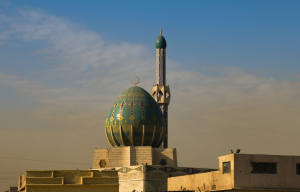
Iraq in 2026 is not a neat post-conflict turnaround story. It is a big, resource-rich state still debugging its corporate operating system in real time. The laws are there, the institutions exist, the investment narratives are persuasive — but the gap between what is on the books and what works on the ground remains wide.
For investors used to the curated ecosystems of Dubai, Riyadh or Doha, Iraq feels familiar and foreign at the same time. The civil-law company forms, the governance language, the push for IFRS and transparency — all recognisable. But everything is refracted through Iraq’s own history: decades of conflict and sanctions, a state-heavy oil economy, and a vast informal private sector that has learned to survive around formality rather than inside it.
Iraq remains an oil state. It holds the world’s fifth-largest proven crude reserves — around 145 billion barrels — and oil revenues still account for over ninety per cent of government income. That dependence is not going away soon. But if you stop at “oil-dependent, therefore risky”, you miss the structural shift underneath.
Iraq is the fourth most populous country in the Middle East, with a young population and infrastructure that, in many sectors, simply needs rebuilding. That combination — demographics plus reconstruction — is what is pulling Iraq back onto board agendas. If you are a regional construction group, energy services player, facilities operator or digital platform, it is increasingly hard to justify a strategy that ignores Iraq.
The housing sector alone illustrates the scale. The government has signed major contracts for large-‑scale residential projects — tens of thousands of units in Baghdad — and has initiated construction across multiple governorates, ‑encompassing housing, schools, commercial centres, healthcare facilities and supporting infrastructure. ‑The construction boom is creating downstream opportunities in logistics, building materials, healthcare, education and retail.
Corporate Forms: Familiar Labels, Different Texture
On paper, Iraq offers a standard corporate toolkit. The Companies Law recognises joint-stock companies, limited liability companies, joint liability companies, simple companies and sole-owner enterprises, alongside branch offices for foreign firms. In practice, foreign investors mostly use two vehicles: the limited liability company and the branch office. Sector-specific regimes for oil and gas, telecoms, banking and large projects are often layered on top.
A critical constraint sits beneath those options: under the amended Companies Law, any new LLC or joint-‑stock company must have at least fifty-‑one per cent Iraqi ownership. That pushes many foreign investors towards the branch-‑office route — particularly those who ‑want tighter control over decision-‑making and profit repatriation. Branches can now be registered without a government contract, following 2017 regulatory changes, though registration timelines remain lengthy: six to twelve months is realistic for either an LLC or a branch, and often longer when sector-‑specific approvals are involved.
Discussions are ongoing about amending or repealing the fifty-‑one per cent local-‑ownership cap. Current momentum suggests an amendment reducing the requirement to thirty per cent is more likely than a full repeal, but this remains a work in progress.
In practice, corporate Iraq operates on two parallel tracks:
- There is the formal track: register with the Ministry of Trade, obtain sector licences, register for tax and social security, and build a structure that will survive due diligence by a Western lender or Gulf sovereign investor.
- Then there is the informal track, where a huge volume of economic activity actually lives: local partners, subcontracting chains, personal networks, unregistered businesses, and a lot of “we’ve always done it this way”.
Most foreign corporates end up straddling both. They build a clean, compliant formal structure — because their governance and lenders demand it — but delivery depends on navigating the informal ecosystem. The art lies in engaging that ecosystem without becoming dependent on practices that will not survive a serious audit.
The Kurdistan Region: A Different Door Into the Same Country
Any serious discussion of investing in Iraq must address the Kurdistan Region, which operates under a distinct legal and administrative framework. The Iraqi Constitution grants it semi-‑autonomous rights — its own parliament, ministries and investment authority, all operating independently of Baghdad.
The key difference for foreign investors is ownership. The ‑fifty-one per cent Iraqi-ownership cap has not been passed by the Kurdish Parliament, so one hundred per cent foreign ownership remains permissible. The Kurdistan Region also operates under its own 2006 investment law, offering incentives including full property ownership, capital repatriation, ten-‑year tax holidays and import duty waivers. Since 2023, the Kurdistan Board of Investment has issued over 450 investment permits, and over 3,600 foreign companies currently operate in the region.
That said, the Kurdistan Region is not a regulatory shortcut. Businesses wanting to ‑operate across both territories must register separately with each set of authorities — a dual-‑track process that adds time, cost and compliance complexity. Whether to enter through Erbil, Baghdad or both should be driven by sector, customer base, ownership preferences and risk appetite, not simply by which door seems easier.
Doing Business: Friction Isn’t an Accident, It’s a Feature of the Landscape
Recent digitalisation efforts illustrate the tension between ambition and execution. The Registrar of Companies and the Ministry of Labour have introduced online filing portals, and all companies must now initiate registration online. However, the portals still rely on manual review — documents are scanned and uploaded for officials to check, and originals are often still requested. The result is that some digital reforms have actually introduced more delays rather than fewer.
New filing requirements have also been added. Companies in federal Iraq must now provide UBO forms, register an Iraqi website with an ‑.iq domain and lease an Iraqi PO Box. Non-‑compliance results in suspension of corporate files until these requirements are met.
Business-environment reform is real, but it is a medium-term story. Corporates that price friction into their timelines and budgets tend to survive; those that assume Iraq will behave like Dubai tend to burn out.
The Informal Private Sector: The Parallel Corporate Universe
One of the most striking things about Iraq is how much of the private sector remains informal. Small and medium-sized businesses dominate, and many operate without full registration, without comprehensive tax compliance, and with labour relationships closer to family arrangements than HR policies.
For foreign investors, that creates three immediate challenges:
- Counterparty risk: When a key subcontractor has limited documentation and no modern financial statements, standard KYC and credit tools feel very blunt.
- Tax and labour exposure: A foreign principal can be dragged into tax or labour disputes because of how a local partner treats its people or reports its numbers. Under Iraq’s tax rules, a non‑resident that is found to be “trading in” Iraq – which can include providing services through a local agent or subcontractor – can trigger a registration and filing obligation, even for very short periods of activity in the country.
- Scalability. It is difficult to scale a supply chain based on informal providers if your end‑clients – whether lenders, public clients or international offtakers – expect formal audit trails.
The flip side is opportunity. Formalisation is a business model in itself: digital payroll platforms, SME-focused banking, credit-information providers, tax and accounting services, and compliance-as-a-service all sit directly in the slipstream of Iraq’s push to bring more of its economy into the regulated fold.
2025–2026: The Quiet but Important Tax and Reporting Reset
The changes that matter most to boardrooms are not always the ones with the loudest headlines. Iraq is moving to modernise tax and financial reporting, aligning more closely with international accounting standards and pushing corporates toward more transparent financial statements. The baseline: Iraqi tax law still requires books and records under the local unified accounting system — effectively Iraqi GAAP — which creates a mapping exercise for any multinational reporting under IFRS at group level but reconciling to local standards for Iraqi tax purposes.
For multinational groups, this matters on several levels:
- Group reporting vs local rules: Companies already reporting under IFRS need to map Iraqi requirements to group standards more carefully — local practice is catching up and discrepancies are harder to gloss over.
- Substance and transfer pricing: Iraq does not yet have detailed transfer-pricing legislation, but its tax law contains an arm’s-length provision— where a related-party arrangement leaves little profit with the Iraqi entity, the tax authority can assess tax on what an independent arrangement would have produced. The expectation is shifting from “show me the legal form” to “show me the real economic activity”.
- Documentation discipline: The era of light documentation and informal tax positions is closing. Well-run investors are treating 2026 as the moment to re-baseline their tax and reporting positionand make sure the paper trail matches operational reality.
On the headline numbers, the corporate income tax rate stands at fifteen per cent for most sectors – but rises sharply to thirty‑five per cent for income connected to oil and gas production and related industries. The General Commission for Taxes also applies a deemed‑profit methodology, meaning that in practice it will compare the deemed tax on reported revenue against the standard rate on reported profit and assess whichever is higher. Tax inspection is mandatory, and the statute of limitations is five years – though the authority retains the right to go back further in certain circumstances. For companies bidding on government work or importing goods, obtaining a clean tax clearance from the audit process has become an increasingly important gating factor. New corporate filing requirements now include a good standing letter from the tax office, reinforcing the link between tax compliance and the ability to operate.
In other words, the tax and reporting story is less about a dramatic new law and more about a culture of enforcement that is starting to resemble what foreign investors see in more mature regional markets.
It is also worth noting that Iraq is not a member of the OECD Inclusive Framework and has not made any announcement on implementing the Pillar Two global minimum tax rules. That does not mean the rules are irrelevant: multinational groups headquartered in jurisdictions that have adopted Pillar Two and with operations in Iraq may still need to run the GloBE calculations across all their entities and comply with filing obligations in those implementing jurisdictions. For groups with Iraqi operations that are part of a larger multinational structure, the interaction between Iraq’s domestic tax system and the emerging global minimum‑tax architecture is something that finance teams need to map carefully, even if Iraq itself has not yet moved.
Government Contracts: New Rules for the Biggest Client in Town
In Iraq, the largest client is the state — and public-contract rules matter enormously. New instructions for public contracts that started applying to tenders in 2026 reset the framework for how foreign companies interact with government entities:
The rules confirm the expectation that Iraqi law and Iraqi courts will usually govern public contracts. That makes sense from a sovereignty perspective, but it forces foreign investors to think very carefully about dispute‑resolution strategy and enforcement risk. On that front, Iraq’s recent accession to the New York Convention on the Recognition and Enforcement of Foreign Arbitral Awards offers foreign investors greater assurance that arbitral awards can be recognised and enforced against Iraqi entities. Iraq has also signed several bilateral investment treaties and double tax treaties – including with Turkey, Saudi Arabia and the UAE – although these remain awaiting ratification by Parliament.
Tender documentation, evaluation criteria and performance requirements are being refreshed, with more emphasis on compliance, performance security and, in some sectors, stronger language around local content and participation.
Budgeting and payment risk remain central. The way Iraq’s annual budgets are passed — including the well-known “1/12th” rules when budgets are delayed — directly affects when and how contractors get paid. These are not public-finance footnotes; they go to the heart of cash-flow modelling and risk pricing.
Payments by Iraqi residents to non-‑resident contractors are subject to withholding tax at fifteen per cent on categories such as interest, royalties and management service fees, with different rates of around three to seven per cent for certain oil and gas-related industries. Getting the withholding-‑tax analysis wrong on a major government contract can affect contract economics and cash-‑flow projections in ways that are difficult to unwind.
The template you used five years ago will not do for a 2026 tender. Every serious bidder needs to run its contract strategy — governing law, pricing, security, subcontracting and dispute resolution — against the new reality.
From a boardroom perspective, the Iraq story in 2026 comes down to a few honest points:
- The market is too big to ignore if you have regional ambitions in energy services, construction, infrastructure, logistics, healthcare, education or digital services.
- The operating environment is high-friction and high-complexity, and that will not change overnight. Any strategy that treats Iraq like another Gulf free zone will fail.
- The most important developments are not just new laws, but shifts in enforcement, tax expectations, labour discipline and public-contract practice. These are already changing how compliant investors must behave.
- Formality is a competitive advantage. Being visibly compliant — on tax, labour, governance, ESG and procurement — is not just about avoiding trouble. It is a way to access better partners, better clients andbetter financing.
- The Kurdistan Region offers a genuinely different entry point — full foreign ownership, tax incentives and a more investor-‑oriented framework — but it comes with its own complexity and should be evaluated as part of a coherent Iraq-‑wide strategy.
- Iraq is a long-game jurisdiction. The investors who succeed arrive with patient capital, realistic timelines, robust compliance culture and deep local partnerships— and grow with the system rather than trying to game it.
Iraq is not a binary yes-or-no question. It is a portfolio decision: how much exposure do you want to one of the region’s most complex but potentially transformative markets, and what governance investment are you willing to make to sustain it?
This is precisely the moment when having the right on-‑the-‑ground adviser makes the difference between a scalable platform and an expensive experiment. Al Tamimi & Company’s corporate teams combine day-‑to-‑day experience with the Iraqi Companies Registrar, tax and social-‑security authorities and sectoral regulators with a regional perspective on how boards, lenders and sovereign investors expect structures to look.
Written by