



Find a Lawyer
Book an appointment with us, or search the directory to find the right lawyer for you directly through the app.
Find out more


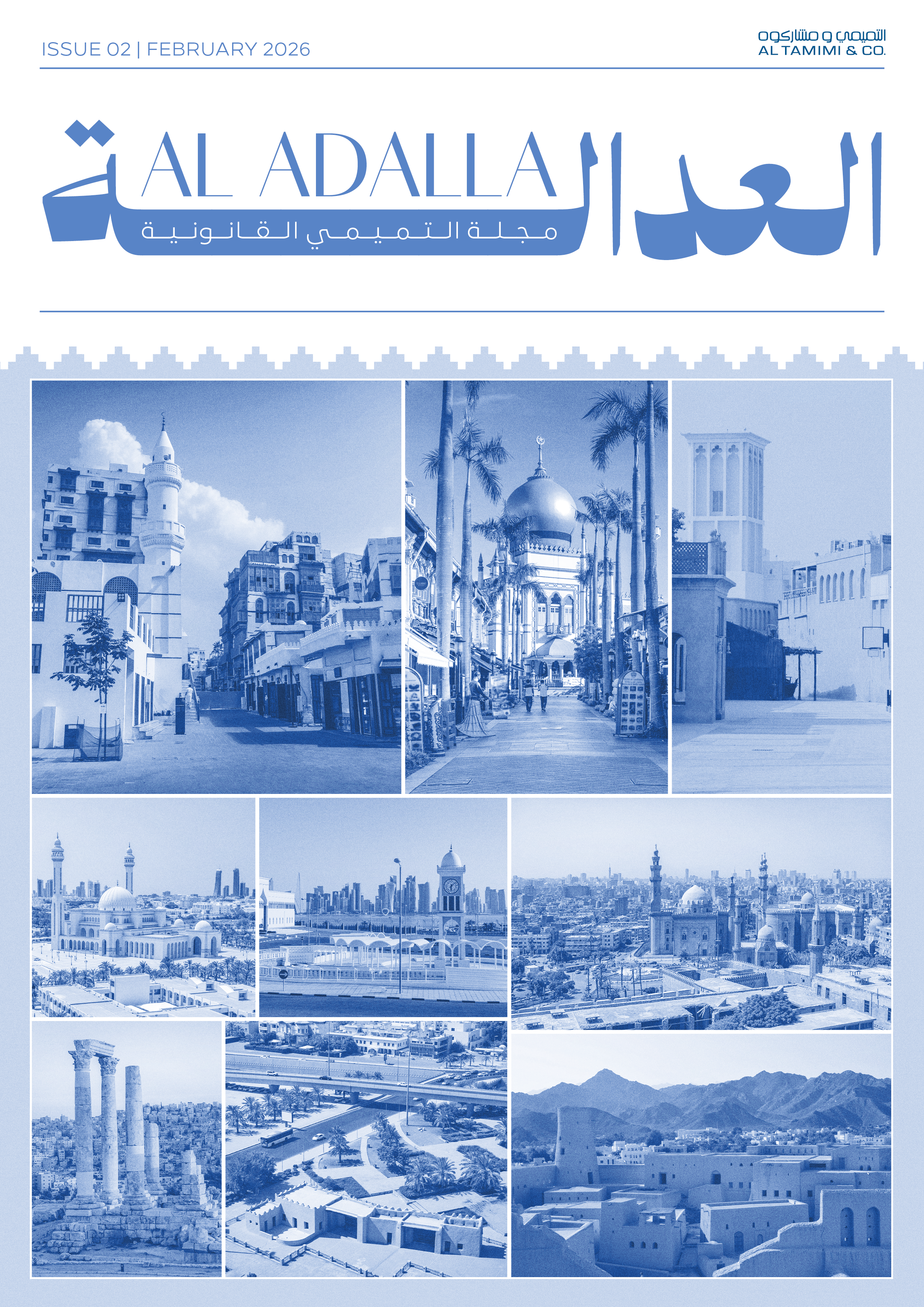
Al Adalla
Read MoreA complete spectrum of legal services across jurisdictions in the Middle East & North Africa.


Client Alert: Strait of Hormuz disruption and English law force majeure
Recent days have seen a sharp escalation in security and operational disruption affecting commercial shipping and logistics across the Arabian Gulf / Gulf of Oman / Strait of Hormuz. These developments have prompted urgent questions from trading, shipping, logistics, energy and insurance market participants as to whether “what is going on now in the Gulf” constitutes a force majeure event under English law, and whether it automatically excuses non‑performance or delay.
Under English law, there is no general doctrine of force majeure which applies automatically. Force majeure relief exists only if the parties’ contract contains an express force majeure clause (or a functional equivalent). Whether the current Gulf situation qualifies as a force majeure event therefore depends on the wording of the relevant contract and the specific impact on the relevant obligations.
In practice, where an English law contract contains a force majeure clause, the analysis commonly turns on the following points:
- Is the event within the clause? Many clauses refer to war/hostilities, acts of government, terrorism, blockade, restrictions on navigation/transport, or events “beyond reasonable control”. Whether the present disruption falls within scope is a drafting and interpretation question.
- What level of impact is required? Clauses often require performance to be “prevented” (typically a higher threshold, often akin to impossibility or illegality), whereas “hindered, impeded or delayed” can set a lower threshold.
- Causation: The party invoking force majeure must usually show that the relevant event caused the inability (or material impairment) to perform the specific contractual obligation.
- Reasonable endeavors / mitigation: Clauses often require the taking of reasonable steps to avoid or overcome the effects of the event. Recent English law authority underscores that “reasonable endeavors” is assessed by reference to the performance the contract actually requires and does not necessarily oblige a party to accept non‑contractual substitute performance.
- Notice and procedure: Many contracts impose strict notice requirements (timing, form, content, and recipient). Failure to comply may prejudice the ability to rely on the clause, even if the event is otherwise within scope.
Importantly, increased cost or reduced profitability alone will not usually amount to force majeure under English law, unless the clause clearly allocates that risk. Sharp increases in freight, war‑risk premiums, congestion, or general market volatility are therefore not, by themselves, a reliable basis for force majeure (although they may be relevent evidence of broader disruption, depending on the contract and the facts).
Where a contract contains no force majeure clause, parties sometimes look to the English law doctrine of frustration. This is a narrow doctrine and is rarely satisfied: performance must generally be rendered, by a supervening event which is beyond the control of the parties, impossible, illegal or the obligation must be transformed into something radically different from what was agreed.
Delay of sufficient duration may be sufficient to frustrate the contract. The test for whether it has in fact done so is nuanced and fact-dependent and should be assessed carefully on a case-by-case basis. Relevant factors will include but are not limited to I) whether the delay renders performance radically different from what was originally undertaken by the parties, ii) whether the risk was foreseeable at the time of contracting, and iii) whether the contract already considers the relevant delaying event. Consideration will also need to be given to the actual past delay experienced by the parties, and the prospective future delay.
What should parties do now?
- Locate and review the precise clause wording (force majeure, war risks, liberty / deviation clauses and master’s discretion, “safe port/safe berth”, sanctions/change in law, exceptions, suspension/termination and notice provisions).
- Map the disruption to the obligation (what exactly is prevented, hindered, or delayed, and why).
- Preserve evidence (carrier circulars and booking suspensions, port/terminal restrictions, security advisories, internal operational logs, correspondence, and timelines).
- Consider mitigation options permitted by the contract (alternative routing or ports, substitute performance, partial delivery, revised schedules).
- Serve protective notices where appropriate and strictly in accordance with contractual notice provisions (while reserving rights).
- Sanctions/export controls review before implementing workarounds that could create compliance exposure.
- Assess whether the contract permits deviation, re-routing, or nomination of an alternative safe port (and on what triggers, limits, and cost/time allocation), including any requirement to act reasonably and/or consult cargo interests or charterers as applicable.
Our team at Al Tamimi & Company is closely monitoring developments affecting regional trade, shipping, and insurance. With our expertise in transport, trade, and insurance disputes, we are well‑placed to support clients on contract analysis, evidence strategy, and the drafting/response to time‑critical notices.
Key Contacts
 o.omar@tamimi.com
Spread the news


Stay updated
To learn more about our services and get the latest legal insights from across the Middle East and North Africa region, click on the link below.