



Find a Lawyer
Book an appointment with us, or search the directory to find the right lawyer for you directly through the app.
Find out more


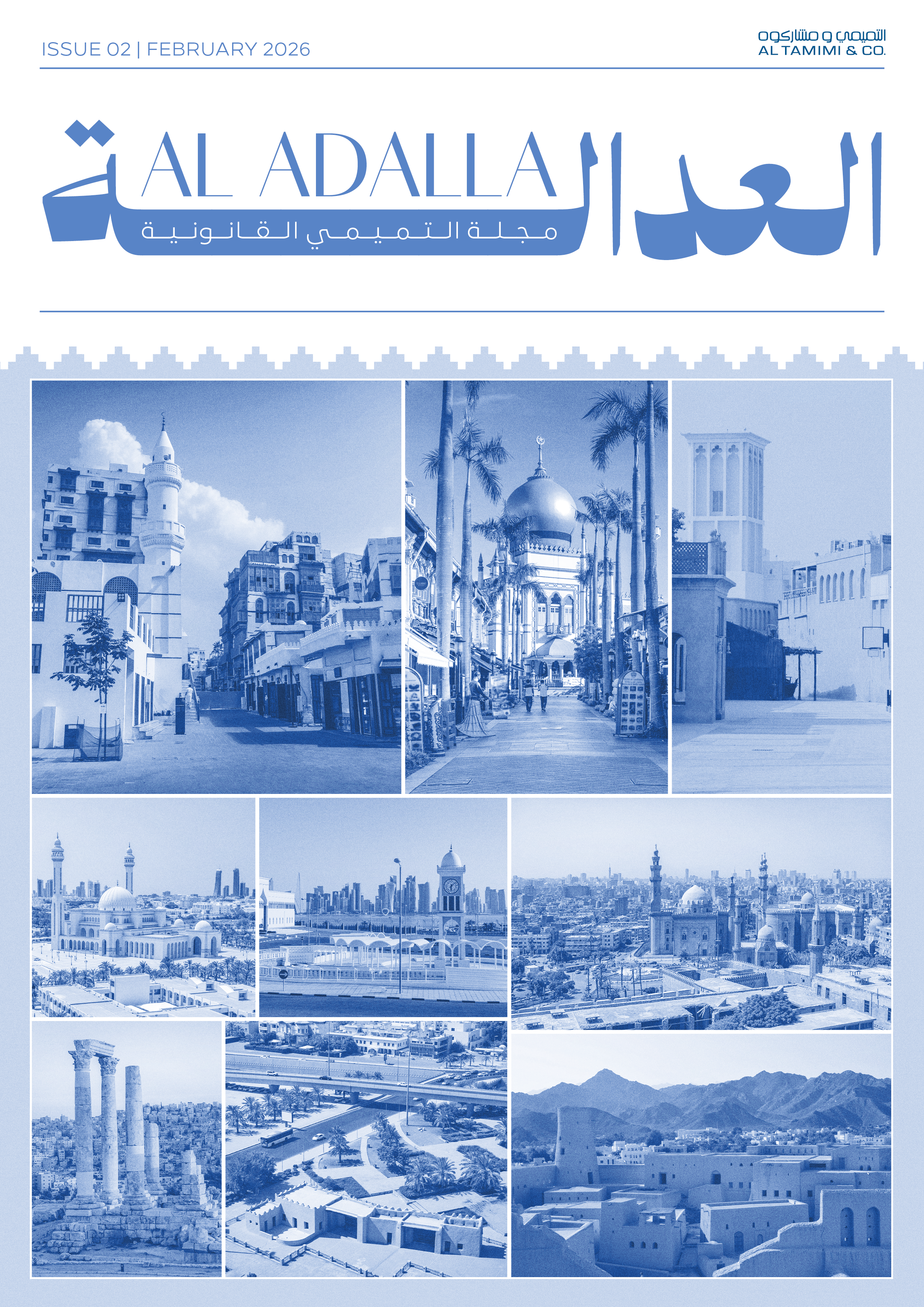
Al Adalla
Read MoreA complete spectrum of legal services across jurisdictions in the Middle East & North Africa.


Abu Dhabi Administrative Resolution No. (26) of 2025: Rules of Procedure of the Owners’ Committees in the Emirate of Abu Dhabi
The Abu Dhabi Real Estate Centre (“ADREC”) issued Administrative Resolution No. (26) of 2025, adopting the Rules of Procedure governing the formation, composition, and operation of Owners’ Committees across all jointly owned real estate development projects in the Emirate of Abu Dhabi (the “Resolution”). The Resolution establishes a comprehensive regulatory framework designed to empower unit owners with a structured, transparent, and democratic mechanism for the collective oversight of jointly owned properties, while delineating the respective roles and responsibilities of owners, developers, and management companies in the governance of common property.
Formation
An Owners’ Committee must be formed once at least 30% of the total number of real estate units in a project are registered in the names of multiple owners in the Land Registry. The committee comprises between five and nine members, including a Chairman and Vice-Chairman, selected by electronic voting from among owners residing in the common property. Developers are expressly prohibited from serving on the committee, even if they own unsold units.
Membership Requirements
Committee members must have full legal capacity, be unit owners residing in the joint property, be of good conduct, have paid all service and complex fees due, hold a valid UAE residence permit, and be approved by ADREC. Membership is terminated automatically upon the loss of any qualifying condition, with the next highest-vote candidate replacing the outgoing member.
Nomination and Voting
The management company must announce the formation process and provide an electronic platform for candidacy applications and voting. The nomination period must be at least 30 days, closing at least 10 days before the scheduled vote. Advertising campaigns, gatherings, or meetings related to the nomination or voting process are strictly prohibited. Each unit owner has one vote regardless of the number or size of units owned, and co-owners of a single unit share one vote. Voting must be conducted through secure electronic means, free from interference by the management company or developer. Results are counted electronically without human intervention.
Accreditation and Term
The management company must submit voting results to ADREC for approval before announcing winners. ADREC may accept or reject any elected member without giving reasons. The committee’s term of membership is two years, extendable by the ADREC Director General for up to one additional year. Members serve without monetary compensation.
Tasks and Powers
The committee’s role is advisory and supervisory rather than executive. It may propose management company candidates to the developer, review annual budgets, monitor management company performance, represent owners on complaints, and notify relevant parties of defects or emergency issues. The committee may also request DMT to compel a change of management company based on justifiable grounds of negligence or poor service quality. The committee is expressly prohibited from directly or indirectly interfering in tasks not legally entrusted to it.
Conduct and Meetings
Committee members must act with integrity, avoid conflicts of interest, maintain confidentiality, and comply with the applicable management system. The committee must meet quarterly, with the option for emergency meetings with prior ADREC notification. Meetings may be held electronically. ADREC retains the power to dissolve the committee, cancel or suspend membership, or replace the Chairman or Vice-Chairman at any time without giving reasons.
Implications for Stakeholders
For unit owners and investors, the resolution formalises a democratic governance mechanism through which they can exercise collective oversight over the management and maintenance of their properties. For developers, the exclusion from committee membership signals a clear intent to separate development and ownership governance, while developers remain responsible for appointing management companies and bearing costs for unsold units. For management companies, the resolution introduces a structured regime of accountability to both ADREC and the Owners’ Committee, with transparent electronic voting and budget review processes.
In conclusion Administrative Resolution No. (26) of 2025 represents a significant step in the maturation of Abu Dhabi’s jointly owned property governance framework. By mandating the formation of Owners’ Committees through transparent electronic processes, imposing clear eligibility and conduct requirements on members, and vesting ADREC with broad supervisory and intervention powers, the Resolution strikes a balance between owner empowerment and regulatory oversight. Stakeholders, including unit owners, developers, and management companies, should familiarise themselves with the provisions of the Resolution and take the necessary steps to ensure compliance with its requirements. As the regulatory landscape continues to evolve, this Resolution is expected to serve as a foundational instrument in promoting accountability and good governance in the management of jointly owned real estate developments across the Emirate.
For further advice please contact our Abu Dhabi Real Estate Team: Lynsey Grossi, David Bowman, Laura Hecht, Dr. Ahmed Alawbthani, Kirsty de Sousa, Raneem Salha
 K.Sousa@tamimi.com
Spread the news


Stay updated
To learn more about our services and get the latest legal insights from across the Middle East and North Africa region, click on the link below.