



Find a Lawyer
Book an appointment with us, or search the directory to find the right lawyer for you directly through the app.
Find out more


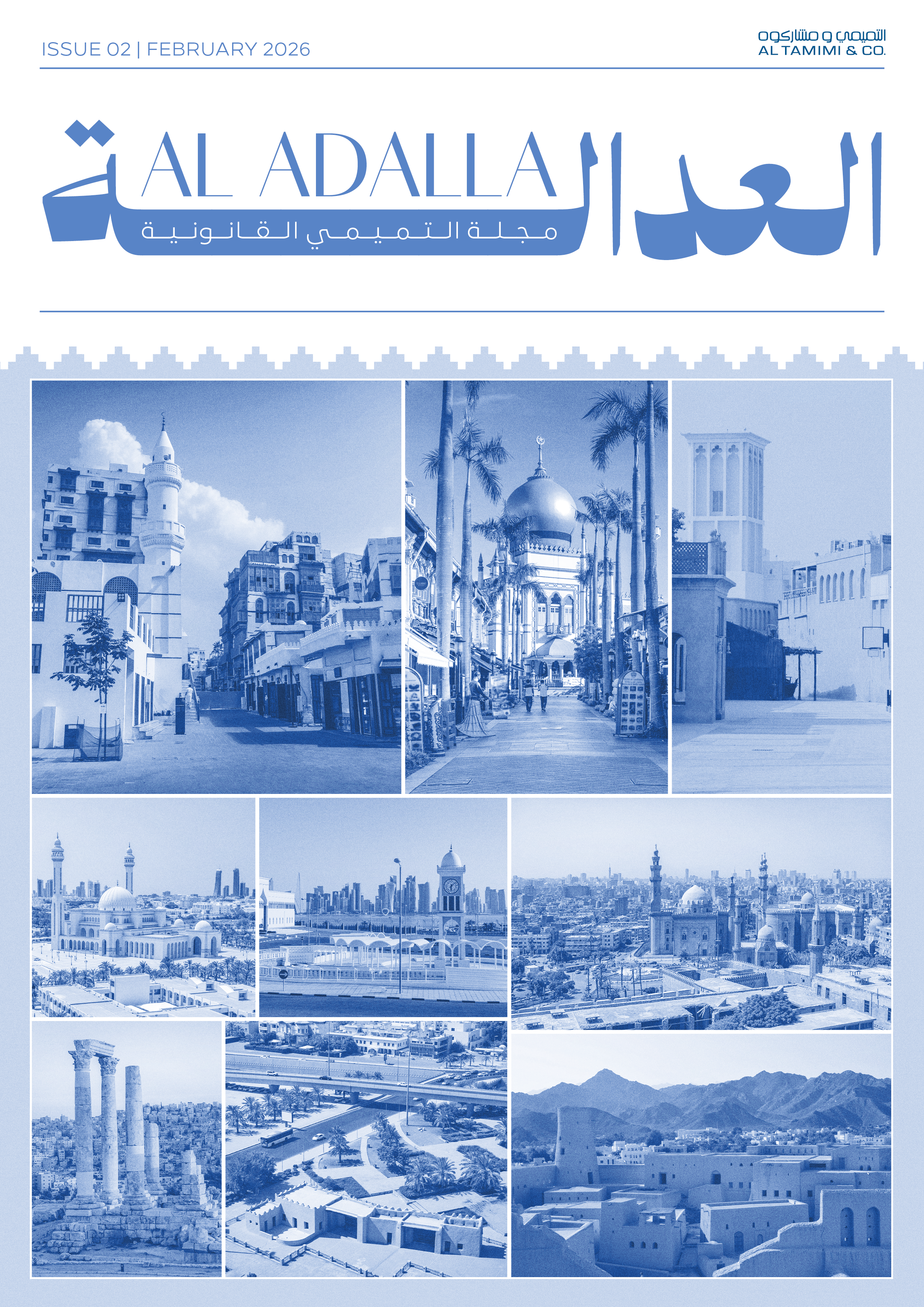
Al Adalla
Read MoreA complete spectrum of legal services across jurisdictions in the Middle East & North Africa.


The KSA’s Insurance Regulatory Sandbox: A New Gateway for Innovation
 6 min 22 sec
May 18, 2026 (Edited)
6 min 22 sec
May 18, 2026 (Edited)
Written by

 a.singh@tamimi.com
  View LinkedIn Profile

The Saudi insurance sector has continued to experience significant change due to regulatory reform, industry expansion, and growing innovation demands. Within this scenario, the implementation of the Insurance Regulatory Sandbox Framework (Insurance Lab) by the Insurance Authority (IA) is a milestone in developing innovation in Saudi Arabia. Unlike full compliance with established requirements, the Framework outlines specific steps that will help innovative insurance solutions to be tested under regulatory supervision prior to market expansion.
In this regard, it can be assumed that the creation of the Insurance Lab has become part of the current regulatory trend towards innovation. It is expected to assist in facilitating further development of the insurance industry, drawing new investors, and enabling the effective testing of new innovative business models.
Overall, the Framework establishes a specific regulatory structure that helps innovative products, services, or models to be tested on the insurance market. All such activities are called ‘Sandbox activities’, and they may include a broad range of innovations related to insurance, including technological advancements and new customer engagement solutions. This implies that such initiatives are encouraged to work within certain limitations and under specific conditions.
The provision of a temporary licence is among the most essential components of the Framework. If an application is considered acceptable to the IA, it can give its consent for the participant to test its solution within the framework of the Sandbox. It means that the participant is given permission to conduct interactions with customers and examine how the model works in practice, whilst avoiding the constraints of operating as a licensed insurance firm or service provider. At the same time, the IA can exercise oversight of this process by imposing certain conditions.
The Sandbox has a rather wide scope because it is designed to cover all innovative insurance solutions in the Kingdom. This includes licensed insurers, local firms, foreign companies wishing to enter the market, and entrepreneurs with attractive innovations. In other words, it means that the IA is determined to attract a broader pool of potential participants and open the market to companies that have never dealt with insurance business before.
Application criteria and process
Access to the Sandbox is not, however, guaranteed. Participants should meet certain criteria to demonstrate that their idea has sufficient novelty, development, and potential value for consumers. Under the Framework, the activity should be insurance related, be ready to test, and deliver certain benefits (e.g. related to efficiency, accessibility, or consumer experience). Also, the activity under consideration should not be fully regulated under current legislation; this is to ensure that only novel ideas are tested via the Sandbox.
The application procedure is well designed and time limited, offering some predictability for those who wish to take part in it. After an application has been submitted, the IA is expected to review it in no more than 40 working days, possibly requesting additional information from the applicant.
Once the application has been reviewed, there comes the stage of operational readiness assessment. The testing phase follows an initial acceptance and involves the most essential part of the Framework. The organisation at this point should meet all requirements of establishment, become ready for testing, and provide a demonstration of the tested solution. On completion of these tasks, a temporary licence will be issued by the IA, which gives the participant permission to start live testing the solution.
The duration of the testing process does not normally exceed a year, but can be extended if necessary. In the course of the testing phase, the participant should follow the terms of the testing proposal and provide regular information about its operations. It should provide reports of various types, including those related to performance, risk assessment, and consumer impact, as well as the final report.
Another important aspect of the Sandbox is governance. Although the Framework provides for flexibility, participants should ensure internal controls are in place, including risk management, anti-money laundering, and counter-terrorism financing measures, along with a customer protection framework. These controls provide safeguards that the innovations will not compromise regulatory standards or the rights of consumers, and that participants will conduct their operations in a disciplined manner.
In addition to governance requirements, applicants must provide detailed documentation as part of their application, including a business case, financial projections, market analysis, and a testing and evaluation plan. They are also required to submit a graduation or exit plan, outlining how the activity will transition out of the Sandbox, whether through full licensing, modification, or discontinuation.
This forward-looking requirement reflects the IA’s focus on long-term viability rather than short-term experimentation. At the end of the testing phase, the IA will conduct a final evaluation to determine the outcome of the Sandbox activity. This evaluation will consider several factors, including compliance with the approved testing plan, the impact on the market and customers, and the overall operational readiness of the solution. Based on this assessment, the IA may grant a full license, extend the testing period, or reject the activity. This structured exit process ensures that only viable and compliant solutions progress to full market entry.
Market implications of the Insurance Lab
There are numerous implications associated with the introduction of the Insurance Lab to the Saudi insurance industry. From the regulatory viewpoint, the introduction of such a tool indicates a change in regulators’ attitudes towards innovation. It means , which means that there will always be space for innovation and testing new things.
From the market point of view, the Sandbox is also crucial in terms of the number of entry barriers it reduces. For instance, the creation of an innovative company requires a long time to obtain a licence, but now even those entities that do not have the necessary licences can work in the Saudi insurance market. Additionally, for existing companies, the creation of a Sandbox allows working on innovations and trying something new without changing operations. As a result, the Sandbox creates additional room for experimentation.
Finally, the responsibility of participants is clearly defined by the Framework. Thus, any innovation should be carefully planned and controlled through proper governance and compliance. In particular, one needs to provide documents, reports, and be under continuous regulatory oversight.
Practically speaking, firms working on new insurance innovations need to determine if their intended activity qualifies as part of the sandbox and fulfils the requisite criteria. Proper planning and preparation at the outset are key, especially when considering the need to develop the business case, testing strategy, and compliance processes that would have to be submitted as part of the application. Collaboration with the IA from the outset could prove helpful, as it would enable the applicant to get a sense of what is expected and how best to craft its proposal.
Conclusion
Ultimately, the Insurance Regulatory Sandbox Framework is not merely about regulation. Instead, it signifies a larger effort to create a robust, innovative, and competitive insurance industry in Saudi Arabia.
The importance of innovation in driving further growth in the Saudi insurance sector cannot be understated. The Insurance Lab provides the necessary platform to develop, test, and improve innovations before introducing them to the market. This initiative will provide an excellent opportunity for companies that wish to take part in the Framework and participate in the process of developing the insurance industry by entering the market and testing new ideas.
The Insurance Regulatory Sandbox will be instrumental in further developing regulation of the Saudi insurance sector. An innovation-friendly environment has been created, while also providing support for new market entrants. The IA has made a commitment to oversee work within the Sandbox, maintaining a proper balance between fostering innovation and ensuring adequate supervision.
Written by

Next Article