



Find a Lawyer
Book an appointment with us, or search the directory to find the right lawyer for you directly through the app.
Find out more


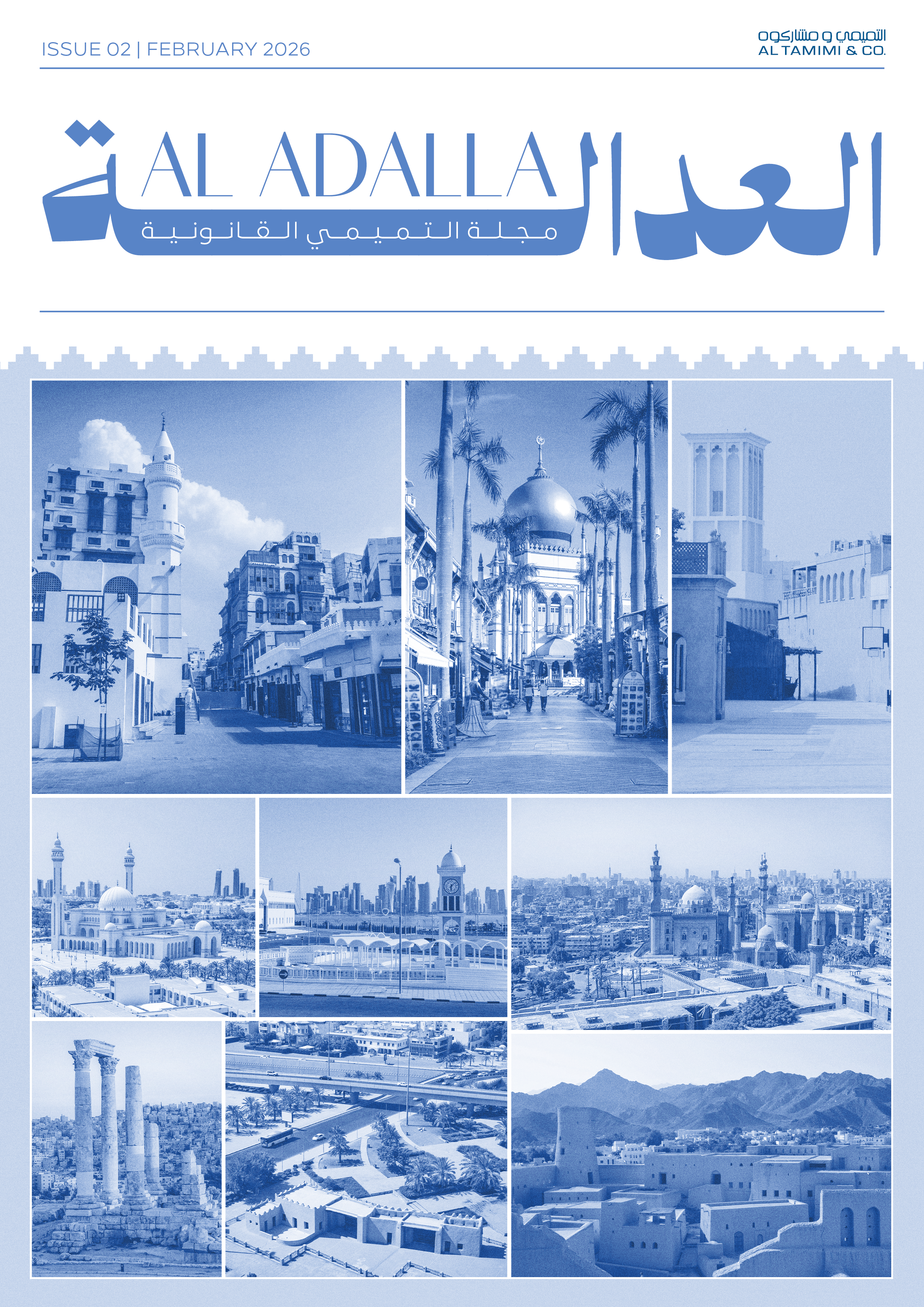
Al Adalla
Read MoreA complete spectrum of legal services across jurisdictions in the Middle East & North Africa.


Qatar Tax Update: Court Clarifies Deductibility of Branch Service Fees
 4 min 45 sec
May 15, 2026 (Edited)
4 min 45 sec
May 15, 2026 (Edited)
Written by

Hani Al Naddaf
Partner, Head of Dispute Resolution - Qatar
 h.alnaddaf@tamimi.com
 View LinkedIn Profile

In today’s integrated financial services landscape, most regional and international banks rely on centralised service centres to support their branches. These centres provide critical functions such as IT, risk management, call centres, compliance, audit, treasury, human resources, legal, and strategic management. Centralisation enables economies of scale, promotes consistency, and enhances operational efficiency across jurisdictions.
The costs associated with these services are generally allocated among branches through various cost allocation methodologies. These may include allocation keys based on revenue, headcount, transaction volumes, or other relevant metrics designed to associate the benefit with the relevant branch. Regardless of the method used, branches ultimately remit payments to their head office for these services.
For many financial institutions, these administrative or service fees represent a significant component of operating expenses. They are often essential to the branch’s ability to function effectively, particularly where critical infrastructure or regulatory compliance is centrally managed. However, the tax treatment of such payments in Qatar has historically presented challenges as to whether these payments can be considered a deductible expense for the purpose of calculating income tax.
Article 7 and the 1% cap
A key issue arises in relation to the period prior to the amendments to Article 7 of Resolution No. 39 of 2019 (Executive Regulations of the Income Tax Law), which imposed a limitation on the deductibility of payments made by branches to their head offices. Specifically, the provision capped such deductions at 1% of the branch’s total revenue. While the Article expressly excluded payments relating to ‘direct services’ from this limitation, the practical application of this exception has proven far from straightforward.
The General Tax Authority (GTA) has, on several instances, adopted a restrictive interpretation of Article 7. Assessments have been issued disallowing amounts exceeding the 1% cap, sometimes without adequately distinguishing between direct and indirect services. This has created uncertainty for taxpayers, particularly in determining which services qualify as ‘direct’ and therefore fall outside the cap. In addition, challenges have arisen where the GTA questions the appropriateness of the cost allocation methodologies used by banks, even when such methodologies are consistent with international accounting standards.
Although the 2023 amendments removed the 1% cap, the limitation continues to apply to tax returns for financial years ending on or before 31 December 2023. Accordingly, disputes relating to earlier periods remain relevant, particularly for financial years 2018–2023. Furthermore, notwithstanding the removal of the cap, the General Tax Authority (GTA) may continue to scrutinise and challenge the cost allocation methodologies applied.
Practical implications
A recent case that Al Tamimi & Company’s tax team handled highlights the practical implications of these issues. The GTA issued an assessment against a banking client, disallowing a substantial portion of administrative fees paid to its head office on the basis that they exceeded the 1% cap of total revenue under Article 7. The disallowed expenses represented costs allocated for services that the branch considered essential to its operations.
The taxpayer filed an objection before the GTA, arguing that the payments related to direct services and therefore should not be subject to the cap. However, the objection was rejected. The taxpayer subsequently appealed to the Tax Appeal Committee (TAC), which upheld the GTA’s position and confirmed the assessment.
Accordingly, the taxpayer approached Al Tamimi & Company’s tax team to file an appeal against TAC’s decision before the Administrative Court of Appeal. The court appointed an expert specialising in tax matters to examine the nature of the services provided and the basis of the cost allocations. This step proved pivotal.
Following a detailed review and discussion with the experts on the nature of the taxpayer’s experiences, the court-appointed tax expert concluded that the services in question were indeed direct services. They were found to be integral to the branch’s core banking operations, including critical functions such as risk management, IT systems, call centre, and compliance support. The expert also determined that the cost allocation methodology applied by the bank was reasonable and aligned with accepted practices.
Relying on the expert’s findings, the Administrative Court of Appeal overturned TAC’s decision and annulled the GTA’s assessment. The court adopted our arguments and affirmed that expenses incurred for direct services should not be subject to the 1% limitation under Article 7. This judgment represents a significant development in clarifying the interpretation of the provision.
Key takeaways for financial institutions
Substance over form
The distinction between direct and indirect services is critical. The court’s reliance on an expert assessment highlights the importance of demonstrating the operational necessity and direct benefit of the services provided. Functions that are integral to the branch’s day-to-day operations are more likely to be treated as direct services.
Robust documentation
Banks should maintain detailed records describing the nature of services received, their relevance to branch operations, and the basis for cost allocation. This includes inter-company agreements, transfer pricing documentation, and internal policies.
Challenging restrictive interpretations
Judicial recourse remains a viable and effective avenue to challenge GTA assessments, particularly where technical or industry-specific considerations are involved.
Impact of the 2023 amendments
While the removal of the 1% cap under the amended Executive Regulations is a welcome development, legacy disputes remain. Taxpayers should carefully review prior years’ positions and consider whether challenges or adjustments are warranted in light of this evolving jurisprudence.
Conclusion
The taxation of branch service fees has long been a contentious issue in Qatar. The recent Administrative Court of Appeal ruling represents a significant step toward a more commercially aligned interpretation, confirming that payments for direct and essential services should not be subject to arbitrary caps.
Financial institutions should continue to maintain robust documentation, apply defensible allocation methodologies, and be prepared to support their positions. Although the regulatory framework is evolving toward greater pragmatism, careful attention remains essential when navigating Qatar’s tax landscape.
Written by
Hani Al Naddaf
Partner, Head of Dispute Resolution - Qatar
h.alnaddaf@tamimi.com
View LinkedIn Profile
Next Article