



Find a Lawyer
Book an appointment with us, or search the directory to find the right lawyer for you directly through the app.
Find out more


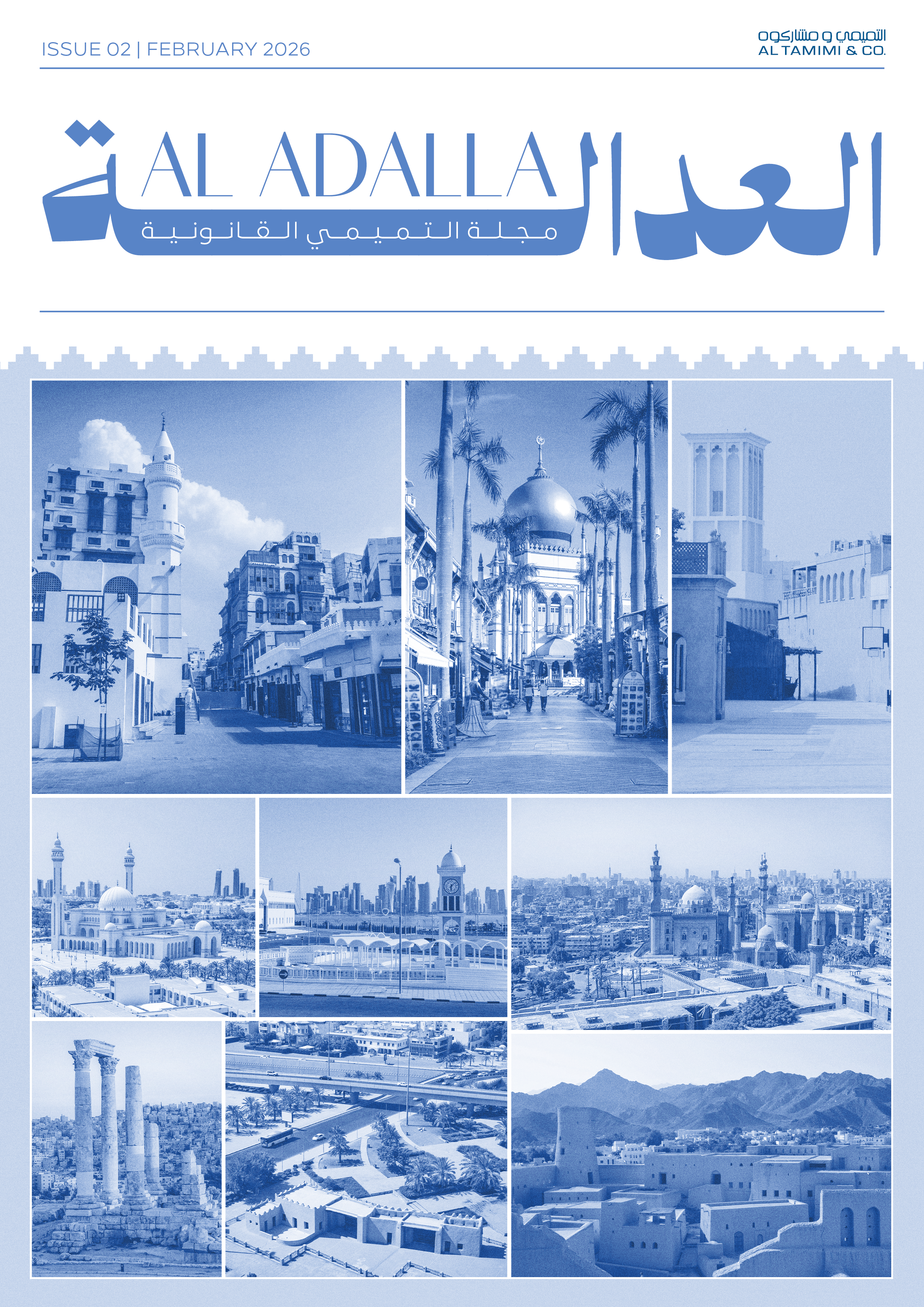
Al Adalla
Read MoreA complete spectrum of legal services across jurisdictions in the Middle East & North Africa.


UAE Civil Transactions Law
The UAE has enacted Federal Decree-Law No. (25) of 2025 Issuing the Civil Transactions Law (the Civil Transactions Law), which will come into effect in June 2026. A fundamental change introduced by the new law is the reduction of the age of legal majority from 21 to 18 years. This reform has important implications for clients with existing wills, guardianship arrangements, and ongoing probate matters, as well as for those who have not yet implemented estate planning structures.
Judicial Discretion in the Absence of Statutory Provisions (Article 1)
The new Civil Transactions Law expressly grants courts broader discretion to apply principles of Islamic Sharia where no explicit legal provision exists, allowing judges to adopt the solution that best achieves justice and public interest, without being restricted to any specific school of Islamic jurisprudence. This represents a clear departure from the previous law, which prioritized the Maliki school and imposed a structured hierarchy among other schools.
As a result, UAE courts are now expressly permitted to exercise independent judicial reasoning and may draw upon principles from different Islamic schools of jurisprudence, provided the outcome aligns with justice, public order, and public interest.
Implications of the Age of Majority Being Reduced from 21 to 18
(a) Age of Majority Reduced to 18 (Article 84)
From June 2026, a person will be deemed to have full legal capacity if they:
- Have reached 18 Gregorian years;
- Are of sound mind; and
- Are not legally interdicted.
This replaces the previous position under which individuals were generally treated as minors until the age of 21, with guardianship and court supervision continuing until that age.
(b) Impact on Guardianship Provisions in Existing Wills
Many existing UAE wills:
- Appoint guardians on the assumption that children remain minors until age 21; and/or
- Provide that children’s assets remain under guardian or court control until that age.
- Under the new law:
- Guardianship will generally terminate at age 18; and
- Age-based assumptions in existing wills may become legally misaligned
Clients should review whether existing guardianship provisions in their wills remain appropriate or require amendment.
(c) Testamentary Capacity at Age 18
With full legal capacity commencing at 18, individuals aged 18 and above may validly execute a will under UAE law.
This is particularly relevant where young adults:
- Are expected to receive inheritances;
- Hold assets or business interests; or
- Are part of local or cross-border family or succession arrangements.
(d) Probate and Release of Assets Previously Held for Minors
Historically, in many probate proceedings, assets were held under court supervision until beneficiaries reached age 21.
Under the new regime:
- Beneficiaries aged 18 will no longer be considered minors; and
- Assets held solely due to minority status may become eligible for earlier release.
Ongoing probate matters should be reviewed to assess whether applications for earlier release of assets can be made.
Court Authorization for Asset Management by Discerning Minors (Article 15)
Notwithstanding the general rules on legal capacity, Article (15) allows the court, upon application by the guardian, trustee, or a discerning minor who has reached 15 Gregorian years, to authorize such minor to manage all or part of their assets, subject to conditions imposed by the court. The court may revoke or restrict this authorization at any time, and transactions carried out within the scope of the authorization shall be valid.
This provision is particularly relevant in the context of the reduction of the age of majority to 18, as it enables earlier, court-supervised financial autonomy and should be carefully considered when drafting or reviewing wills, guardianship arrangements, and estate administration structures.
Heirless Estates of Foreign Nationals — Charitable Waqf (Article 17)
The Civil Transactions Law confirms that where a foreign national dies without heirs and holds assets located in the UAE, those assets will automatically devolve into a charitable waqf, administered by the competent authority.
Absent a valid and enforceable will, this outcome applies by operation of law, regardless of the deceased’s personal intentions.
To avoid UAE-situs assets being distributed to a charitable waqf where there are no immediate heirs or heirs that may not come forward on the passing of the individual, clients should:
- Put a valid will in place; and
- Ensure the will is properly drafted and registered with the relevant UAE authority.
Foreign wills or foreign laws should not be relied upon with regards to UAE-situs assets given the complexity and length of time it takes to enforce foreign wills or laws.
Additional Matters to Consider Before June 2026
As part of a broader review, clients should consider:
- Whether age-based distributions in existing wills remain appropriate at 18;
- Whether executors have sufficient powers to manage transitions;
- Whether staged or conditional distributions should be introduced;
- Whether distribution of assets to heirs in ongoing probate matters can be accelerated; and
- Whether current structures adequately protect beneficiaries at the earlier age of legal capacity.
Recommended Action
With the June 2026 effective date approaching, clients should:
- Review and amend existing UAE wills;
- Update guardianship and age-related provisions;
- Review probate files involving beneficiaries aged 18 or above; and
- Ensure wills are properly drafted and registered to avoid default statutory outcomes.
Early action allows time to restructure arrangements proactively rather than reactively.
How can we help?
For more information on the above alert, feel free to contact the key contacts.
Key Contacts
 d.maldonado@tamimi.com
Spread the news


Stay updated
To learn more about our services and get the latest legal insights from across the Middle East and North Africa region, click on the link below.