



Find a Lawyer
Book an appointment with us, or search the directory to find the right lawyer for you directly through the app.
Find out more


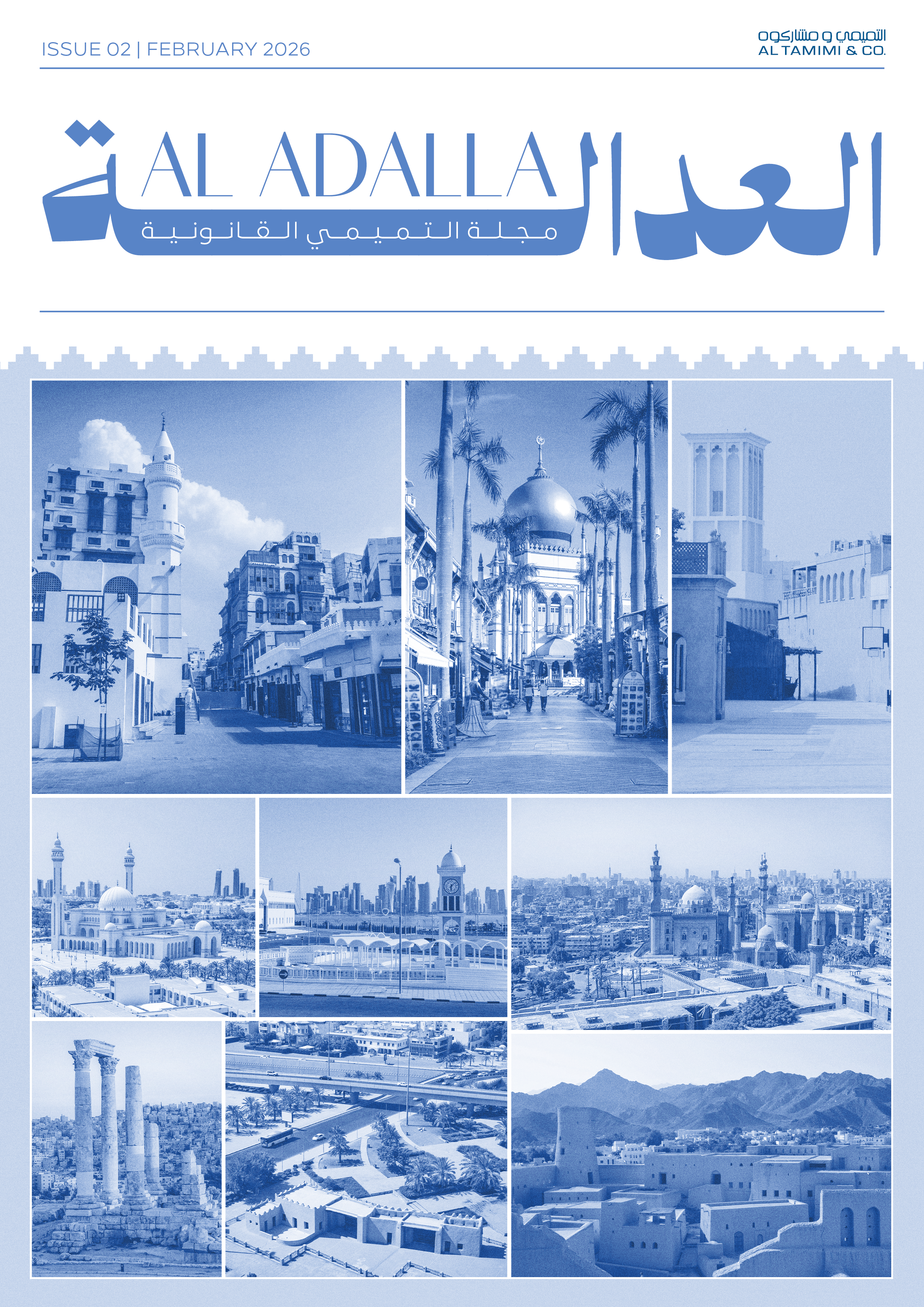
Al Adalla
Read MoreA complete spectrum of legal services across jurisdictions in the Middle East & North Africa.


Oman overhauls its Tourism Regulations: What Investors and Operators need to know
On 26 April 2026, Oman’s Ministry of Heritage and Tourism published Ministerial Decision No. 1152/2/1/141/2026, bringing into immediate effect a comprehensive new Implementing Regulation of the Tourism Law. The new rules expressly abrogate and replace in their entirety the previous regulatory framework, namely Ministerial Decision No. 39/2016 (the former Implementing Regulation of the Tourism Law) and Ministerial Decision No. 124/2021 (which amended it), touching every corner of the tourism sector – from hotel licensing and tourist guiding to adventure tourism, live performances and business events.
Importantly, the 2007 Executive Regulations of the Real Estate Ownership Act in Integrated Tourism Complexes are not affected by this repeal and remain in force as a separate regulatory regime governing real estate ownership within ITCs.
If you operate, invest in, or are planning to enter Oman’s tourism market, there are things you need to act on – and a six-month window to do them.
The Big Picture
Oman is serious about tourism. Underpinned by Vision 2040, the government has been steadily repositioning the Sultanate as a premium destination for luxury travel, eco-tourism and business events. The previous regulatory framework (introduced in 2016 and last amended in 2021) had not kept pace with that ambition.
The new regulations are a clear signal that Oman is building a more mature, institutionally attractive tourism market. For hotel investors, international operators and tourism businesses, this means greater regulatory certainty, but also new compliance obligations that require prompt attention.
Who Is Affected?
The new regulations apply to anyone engaged in a licensed tourism activity in Oman, including:
- Hotels, hotel apartments, camps, eco-lodges, heritage lodges, guesthouses and rest houses;
- Travel and tourism offices and branches of foreign tourism companies;
- Tourist guides;
- Adventure tourism operators;
- High-end performing art troupes; and
- Business tourism operators (conferences, exhibitions, incentive programmes).
The Six-Month Window: Act Now
All existing licence holders must regularise their status under the new regulations within six months of the Regulation’s entry into force. That deadline falls in late October 2026.
This is not a formality. Failure to comply can lead to licence suspension or revocation. Existing operators should begin their compliance review immediately.
The New Licensing Framework
The regulations establish a single, consolidated licensing framework administered by the Ministry of Heritage and Tourism. Procedural points include:
60-day decision rule. The Ministry must decide on licence applications within 60 days of receiving a complete application. If it does not respond within that period, the application is deemed approved. This is a meaningful investor-friendly provision.
Renewal discipline. Applications for renewal must be filed at least 60 days before licence expiry. Late renewals attract a 10% monthly delay fine on the licence fee.
Prior Ministry approval required before modifying licence data, transferring or assigning a licence, or making structural changes to an establishment.
Inheritance planning. If a licensee dies, heirs have six months to notify the Ministry and a further six months to transfer the licence to a qualifying person. Failure to complete the transfer results in automatic revocation.
Financial Obligations: Fees and Auditing
Tourism and hotel establishments must collect and remit two fees from customers on top of the price charged:
4% Tourism Fee on all facilities across the establishment, remitted to the Ministry quarterly with a certified revenue statement.
8% Service Charge on services provided, to be distributed in cash to establishment workers.
Both are subject to external audit requirements. Establishments must appoint a Ministry approved external auditor and submit certified financial statements within two months of each fiscal year end. Annual declarations of tourism fee amounts must be submitted within three months.
Failing to remit tourism fees for five consecutive months is a ground for automatic licence revocation.
Operational Requirements for Hotels and Tourism Establishments
Beyond licensing fees, all tourism and hotel establishments must:
- Appoint a manager in charge of the establishment at all times. Leaving this position vacant for more than 60 days triggers grounds for licence revocation;
- Display their licence and classification signage prominently and on all printed and digital materials;
- Establish electronic data links with the Ministry and the Royal Oman Police; and
- Submit periodic statistical data, including guest nationalities, revenues, occupancy rates and workforce numbers.
Restaurants and cafés located within hotel establishments, in tourism areas, on government tourism land, or operating under a commercial franchise must obtain a tourism classification certificate valid for three years, renewable for the same period.
Specific Sectors: What’s Different
Travel Offices and Foreign Tourism Companies
Foreign tourism companies wishing to operate in Oman must obtain a Ministry licence before establishing any branch or office. Once licensed, foreign branches are subject to the same rules as Omani travel offices. All offices must hold mandatory tourist insurance covering the full duration of any trip organised, and may only engage licensed tourist guides.
Tourist Guiding: The English-Language Restriction
Guiding in English is now expressly restricted to Omani nationals only. Non-Omanis may still hold tourist guiding licences but may not guide in English. Licences are classified into three categories: general (all governorates), site-specific, and specialist (e.g. geology, adventure tourism). Non-Omani guides are licensed on shorter annual terms rather than the two-year terms available to Omani nationals.
For international operators and tour companies, this restriction has immediate workforce planning implications. Any arrangement that relies on non-Omani English-speaking guides will need to be restructured.
Adventure Tourism
Adventure tourism is now a standalone licensed category. Operators (who must be Omani nationals) face a robust compliance framework:
- Mandatory insurance against all risks arising from adventure activities, issued in Oman;
- A comprehensive safety management plan and standard operating procedures at each operating site;
- A risk management plan and safety audit certificate from the competent authority;
- Provision of route maps, risk information and first aid supplies to tourists; and
- Mandatory trip cancellation in cases of weather warnings or natural disasters.
Adventure activities covered under the regulations include off-road driving, ATV tours, mountain biking, canyoning, cave exploration, abseiling, zip lines and camel and horse riding activities.
Performing Art Troupes
High-end performing art troupes (musical, singing or folkloric) may only perform within three, four or five-star hotels and classified tourism restaurants. Performances must comply with a defined schedule (noon to 3pm and 6pm to 1am on most days; evenings only on Fridays) and are prohibited during designated Islamic religious occasions including the full month of Ramadan, the Prophet’s Birthday, Isra and Mi’raj, the Day of Arafah and the Hijri New Year.
Hotels and restaurants hosting troupes bear full legal responsibility for all performances. Non-Omani troupe members may not wear traditional Omani attire.
Business Tourism
Operators of conferences, exhibitions, meetings and incentive programmes now require a specific Business Tourism licence. Licensees must share programme and visitor data with the Ministry to contribute to a national database tracking visitor numbers and economic impact. Financial support for business tourism events may be sought from the Ministry through a formal application process.
Tourism Land and Usufruct Rights
The regulations include a detailed framework for the allocation and use of government tourism lands and designated tourism areas. Notable points for developers and investors:
- Usufruct rights are created by contract with the Ministry and must be registered with the Land Registry Secretariat at the Ministry of Housing and Urban Planning;
- A bank guarantee equivalent to the contract value is required to obtain usufruct or exploitation rights;
- Transferring or assigning usufruct requires prior written Ministry approval and settlement of all outstanding financial obligations;
- The Ministry may terminate usufruct rights for non-performance, unjustified work stoppages of more than 90 days, misuse of project land, fraud, unauthorised asset disposal, or insolvency; and
- Planning and development works in tourism areas require prior written Ministry approval.
Enforcement: Inspections, Fines and Licence Revocation
The Ministry has broad inspection powers. Authorised officers may enter any tourism establishment, review licences, records and operating systems, and require operators to provide data and assistance. Obstruction carries a fine of OMR 1,000 (doubled on repeat offences).
Administrative fines under the new regulations range widely:
| Violation | Fine (OMR) |
|---|---|
| Operating without a licence or engaging in unlicensed activities | 1,000 (doubled on recurrence; licence suspension up to 3 months) |
| Non-compliance with Ministry circulars or instructions | 1,000–2,000 (licence suspension up to 1 month) |
| Modifying licence data without prior written approval | 1,000–2,000 (licence suspension up to 1 month) |
| Failure to establish electronic linkage with Ministry / Royal Oman Police | 500–1,000 |
| Failure to comply with tourism fee remittance obligations | 10% monthly delay fine on the fee outstanding |
| Engaging an unlicensed tourist guide or failing to insure tourists | 1,000–2,000 (licence suspension up to 1 month) |
| Violations of adventure tourism safety requirements | 2,000–6,000 (plus OMR 100/day for continuing violations) |
| Performing during prohibited religious occasions | 1,000–2,000 (licence suspension up to 1 month) |
Beyond fines, the Ministry may suspend or revoke licences. Automatic grounds for revocation include failing to remit tourism fees for five consecutive months, not paying fines within six months, ceasing operations for six months, and failing to renew within 60 days of expiry.
What This Means for You: Our Recommendations
The new framework is not simply a tightening of existing rules – it is a comprehensive rewrite. We recommend that clients:
Audit existing licences. Review all current tourism licences against the new requirements and identify any gaps that need to be addressed before the October 2026 deadline.
Review financial reporting structures. Ensure systems are in place to collect, report and remit the 4% tourism fee quarterly, and that an approved external auditor is appointed.
Establish electronic links. Prioritise the Ministry and Royal Oman Police linkage requirement to avoid fines.
Reassess workforce planning. Tour operators and travel offices employing non-Omani English-speaking guides will need to reconsider staffing models in light of the language restriction.
Review usufruct and land-use contracts. Developers and investors holding government tourism land usufruct rights should review their contracts for compliance with the new termination triggers and approval requirements.
Consider opportunities. The 60-day deemed-approval rule, combined with clearer licensing pathways, creates a more predictable operating environment for new entrants and those looking to expand.
Key Contacts
 a.shaikh@tamimi.com
Spread the news


Stay updated
To learn more about our services and get the latest legal insights from across the Middle East and North Africa region, click on the link below.