Find a Lawyer
Book an appointment with us, or search the directory to find the right lawyer for you directly through the app.
Find out more


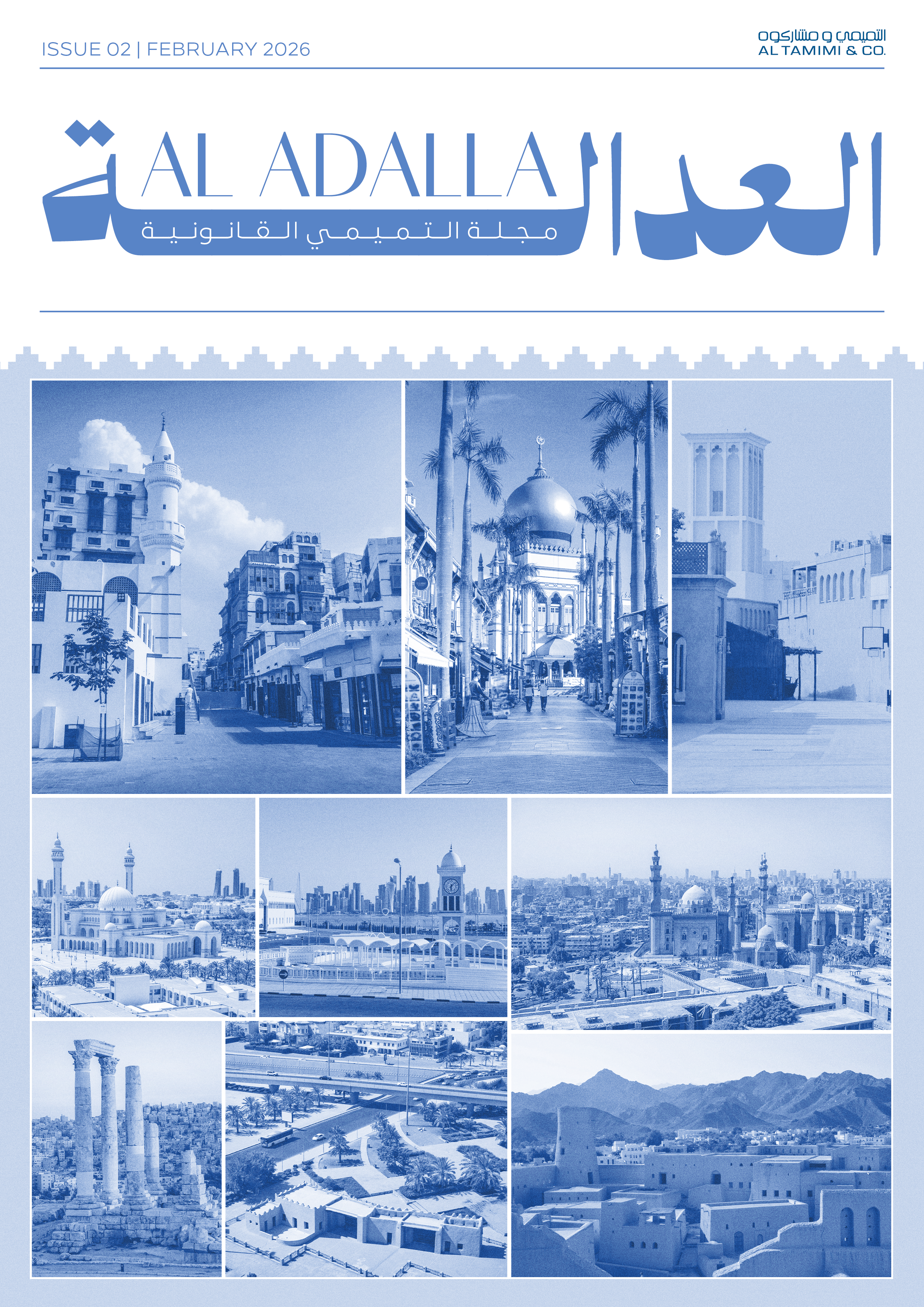
Al Adalla
Read MoreA complete spectrum of legal services across jurisdictions in the Middle East & North Africa.


Oman: Healthcare & Life Sciences Investment Update
The health sector in Oman depends heavily on imported equipment and materials; imports account for the majority of the estimated $500 million spent annually on pharmaceutical products and medical equipment. To reduce reliance on imports, Oman unveiled plans in 2020 to establish new pharmaceutical factories in Oman. The goal is to meet 50% of the sector’s demand with local supply by the end of 2050.
Salalah City for Pharmaceutical and Medical Industries & Khazaen Economic City dedicated life sciences clusters announced
Oman’s Public Authority for Special Economic Zones and Free Zones (“OPAZ”) announced a plan to enhance Oman’s national drug security and continue to localize pharmaceutical and biomedical industries by establishing specialized industrial clusters for pharmaceutical and medical device industries in special economic zones (“SEZ”), industrial cities, and free zones in Oman. This comes after an announcement from His Majesty Sultan Haitham bin Tarik during a Council of Ministries meeting.
OPAZ stated that the first phase includes launching:
- Salalah City for Pharmaceutical and Medical Industries, which will be a cooperation and integration between the Salah Free Zone and Raysut Industrial City, for a total of over 1 million square meters; and
- A 500,000 square meters zone for pharmaceutical and medical industries within Khazaen Economic City.
The proposed cluster aim to enhance national drug security and support national efforts aimed at localizing pharmaceutical, biomedical, and medical devices industries, while attracting qualitative investments to this sector. This initiative is also in line with Future Health Vision (Health 2050), which aims to establish effective mechanisms that enhance the sustainability of the health system in providing appropriate, high-impact medical products.
Local manufacturing
Encouraging local manufacturing, and reducing dependence on imports and lowering the costs associated with sourcing medical supplies from abroad, has been a multi-authority effort. In this context, the Oman Center for Drug Safety, under the Ministry of Health, has recently updated its procedures and guidance on the necessary procedures for licensing manufacturing facilities for human pharmaceuticals, herbal medicines, medical devices, and medical supplies – from the initial application submission to the full establishment of the industrial facility and the commencement of production.
Such pharmaceutical manufacturing plants are required to be set up in industrial cities or free zones. This applies to full/complete manufacturing, partial manufacturing, primary packaging, as well as secondary packaging. In general, life sciences investment opportunities highlighted by OPAZ span the value chain, including:
- Generic pharmaceuticals;
- API production;
- Vaccines & biopharmaceuticals;
- Research laboratories;
- Medical equipment;
- Surgical & laboratory instruments;
- Digital health; and
- Smart health monitoring
Special economic zones & free zones:
Enhancing the Sultanate’s investment client, in September 2026 Oman enacted the executive regulations to the Special Economic Zones and Free Zones Law (“Free Zone Law”, Royal Decision No. 38 of 2025 and its executive regulations Regulation No. 81 of 2026). Its intent is to streamline licensing, land allocation, and investor services, while setting out provisions for foreign property ownership, residency, and real estate development.
The executive regulations reinforce the idea of a “One-Stop Shop” for the provision of all services required by a project. Additionally, provision are included for identify certain projects as strategic project, and providing additional flexibility and benefits to these projects; investment costs of a strategic project must be no less than 10 million Omani Rials. Included in the criteria for determining whether a project is a strategic project is whether it support pharmaceutical security. The executive regulations also outline the additional benefits, incentives and facilitations that may be granted to strategic projects.
Several of the key SEZ, free zones, and industrial cities in Oman for pharmaceutical and medical products companies include:
- Salalah Free Zone;
- Khazaen Economic City’
- Sohar Free Zone; and
- Raysut Industrial City.
Investment incentives:
The domestic pharma market is projected to reach $1.24 billion by 2031 (according to the Oman Observer). The market was valued at about $752.4 million in 2024 and is forecast to grow at a compound annual rate of 7.4 per cent (according to OPAZ).
Oman offers a variety of benefits and incentives, depending on the location and specifics of the project, including but not limited to:
- 100% foreign ownership in free zones;
- Subsidized land leases for healthcare projects;
- Tax exemptions;
- No minimum capital requirement;
- Usufruct agreements of up to 50 years, renewable;
- Customs exemptions on raw materials and equipment;
- 30% price preference for qualifying full manufacturing in government tenders; add
- 20% price preference for secondary packaging.
Tax treatment of medical products:
In September 2026, Oman’s Tax Authority issued a detailed appendix of medicines and medical equipment that are subject to a value added tax (“VAT”) of zero percent.
Originally, Oman introduced a value added tax (“VAT”) system in 2020, under Oman Sultani Decree No. 121/2020 Promulgating the Value Added Tax Law. In accordance with the law, the Oman Tax Authority issued a decision (Oman Decision No. 59/2021) detailing the medicines and medical equipment that would be taxed at the zero rate. This latest decision provides an appendix with a more detailed product list, with their associated HS codes. Specific products listed in this new annex include antibiotics, hormones, vaccines, blood serums, infant foods, medical foods, medical solutions, oxygen gas, dental products and smoking cessation aids such as patches and sprays. This list may be updated from time to time.
This appendix will be effective on 1 October 2026. In line with the VAT law and the 2021 decision, the measure continues to cover medicines, herbal remedies, biological and health preparations, foods for medical use, and medical equipment, subject to the issuance of a release permit from the Ministry of Health in accordance with the customs code.
A zero-rated supply means that zero VAT will be charged to the recipient of the goods. However, a “taxable person” supplying such zero-rated medicines or medical goods is eligible to deduct input tax on the costs relating to these zero-rated supplies. Such zero-rating applies to all supplies made in Oman throughout the supply chain, including by distributors, wholesalers, pharmacies, and retailers. Different rules apply in the event these supplies form part of healthcare services.
Call for Investments:
In July of this year, the Ministry of Commerce, Industry and Investment Promotion (“MoCIIP”) announced a series of investment opportunities in the healthcare sector, with a total estimated investment value of approximately OMR 16 MM (USD 42 MM). The initiative is being launched in collaboration with the Ministry of Health and OPAZ. It comprises four investment opportunities covering preventive healthcare, medical rehabilitation and medical manufacturing.
1. Early detection center:
a. Capital investment estimate: 7.5 million OMR, with a payback period of 7 years;
b. Located in Baushar;
c. Intended to provide early detection screenings, including: prenatal genetic testing; neonatal screening; pre-marital screening, which may soon become mandatory under proposed legal reforms in Oman; pre-employment screenings; high-risk of hereditary diseases testing; etc.
2. Manufacturing of chlorhexidine gluconate solution:
a. Capital investment estimate: 2.4 million OMR, with a payback period of 2 years;
b. Located in Salalah Free Zone (OPAZ);
c. Currently, Oman imports most CHG solutions, mainly from India, creating vulnerability to supply disruptions. Local manufacturing would reduce import reliance, enhance supply chain resilience, and secure steady availability.
3. Manufacturing of paraffin-soaked gauze:
a. Capital investment estimate: 577,500 OMR, with a payback period of 5 years;
b. Located in Sohar Free Zone & Port (OPAZ);
c. The expansion of hospitals and healthcare facilities across Oman suggests a growing market for medical consumables; and
4. Rehabilitation services hospital:
a. Capital investment estimate: 6 Million OMR, with a payback period of 7 years;
b. Located in Muscat;
c. Proposed as an integrated rehabilitation hospital.
Oman is actively positioning itself as for healthcare and life sciences investment. Through a combination of dedicated industrial clusters, streamlined regulatory frameworks, favorable tax treatment for medical products, and targeted investment incentive, the Sultanate is building a compelling proposition for pharmaceutical, biomedical, and medical device companies looking to establish or expand manufacturing operations in the Gulf region.
Investors and industry participants should monitor developments closely. Early movers stand to benefit from favorable land allocations, strategic project designations, and a regulatory environment that is being purposefully shaped to attract and support life sciences investment.
How we can help
Through our deep sector knowledge, expertise, and “full services” offering, we would be happy to assist with any questions regarding investment structuring, commercial contracts and arrangements, regulatory compliance, or M&A strategies in Oman’s healthcare and life sciences sector.
 C.Sochacki@tamimi.com
Spread the news


Stay updated
To learn more about our services and get the latest legal insights from across the Middle East and North Africa region, click on the link below.