



Find a Lawyer
Book an appointment with us, or search the directory to find the right lawyer for you directly through the app.
Find out more


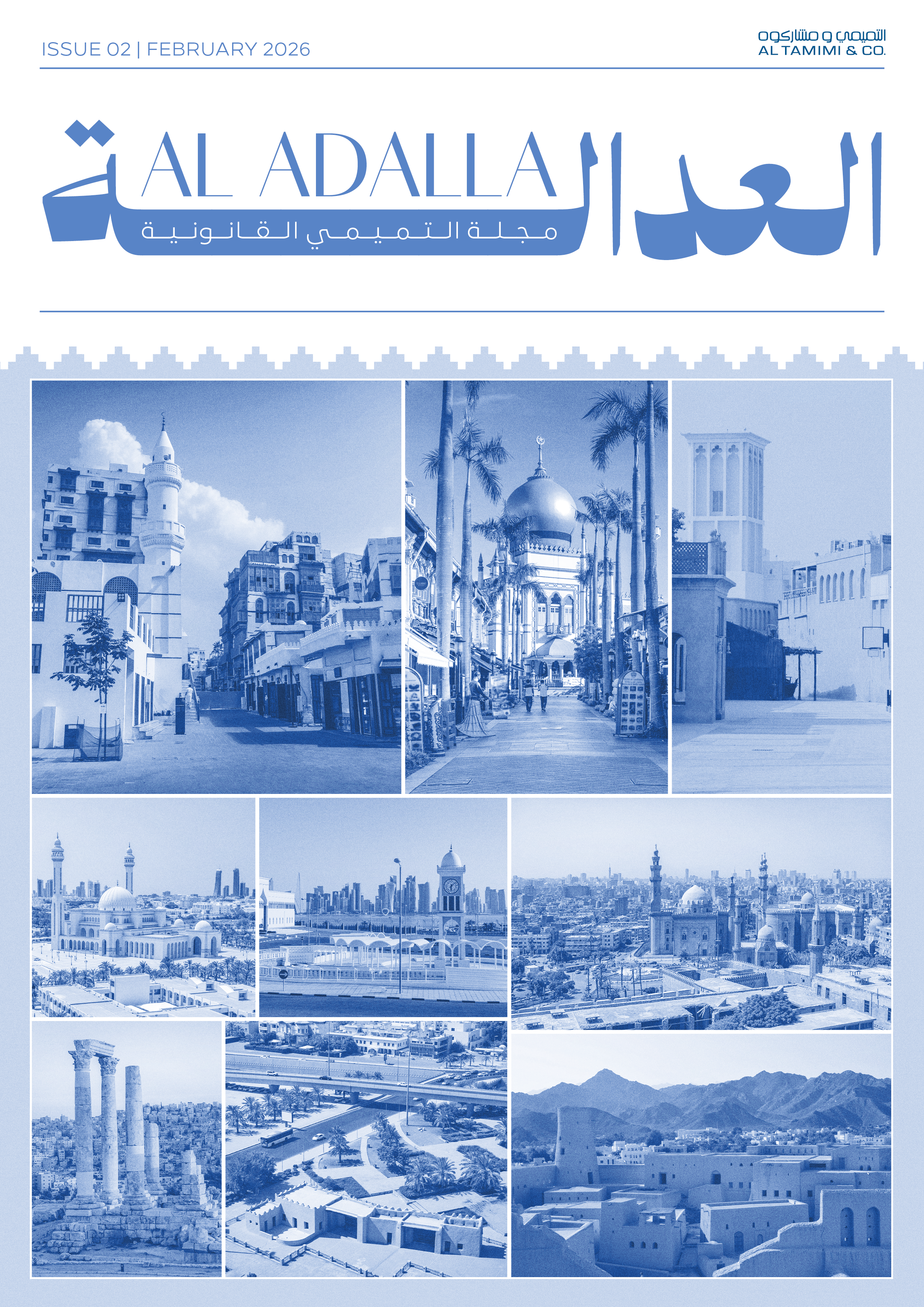
Al Adalla
Read MoreA complete spectrum of legal services across jurisdictions in the Middle East & North Africa.


Gulf Disruption and Energy Supply Risk: Why Egypt’s SUMED Corridor Matters
Why this matters
Recent developments in the Gulf have materially disrupted global energy logistics and renewed focus on the legal and commercial resilience of energy supply chains.
Public reporting indicates that the conflict began late February 2026 and has severely affected traffic through the Strait of Hormuz, a chokepoint that handled around 20 million barrels per day in 2024, equivalent to roughly 20% of global petroleum liquids consumption. The IEA has also noted that more than 112 bcm of LNG transited the Strait in 2025, equating to almost 20% of global LNG trade.
The resulting disruption has had immediate market consequences. Reporting has referred to a near-halt in tanker traffic in early March 2026, significant production cuts across parts of the region, and sharp upward pressure on oil and gas prices, including major volatility in European gas markets. These developments are already affecting shipping patterns, procurement costs, and broader industrial input prices across import-dependent markets.
Egypt’s SUMED Pipeline as a strategic alternative
Against that backdrop, Egypt’s Suez-Mediterranean (“SUMED”) Pipeline has assumed renewed strategic importance.
SUMED provides an overland crude route between Ain Sokhna on the Red Sea and Sidi Kerir on the Mediterranean, offering an important alternative pathway for certain regional flows. According to the U.S. Energy Information Administration, the pipeline has a capacity of approximately 2.5 million barrels per day.
In addition to transit capability, SUMED benefits from significant storage infrastructure at both terminals. This makes it commercially important not only as a transport route, but also as a mechanism for storage, blending, and supply optimisation.
Limitations of SUMED
SUMED should not, however, be viewed as a full substitute for the Strait of Hormuz.
The scale of flows ordinarily moving through Hormuz remains materially greater than available bypass infrastructure. Even where alternative routes or pipelines exist, they provide mitigation rather than replacement. In practical terms, SUMED functions as a pressure-relief mechanism: it can improve routing flexibility, support storage and cargo optimisation, and enhance resilience for certain market participants, but it cannot eliminate the systemic consequences of a prolonged Hormuz disruption.
Egypt’s expanding energy infrastructure
Egypt is also reinforcing its wider energy infrastructure in a way that may increase its importance as a regional balancing point.
Recent government and industry reporting has highlighted infrastructure developments at Ain Sokhna, SUMED, Sonker, and Damietta, including regasification and connectivity enhancements. These developments broaden Egypt’s role beyond transit alone and increase its utility for storage, regasification, and regional supply management.
For market participants, this suggests an increasing ability to use Egyptian infrastructure not only as a route of passage, but also as part of a broader energy security and logistics strategy.
Key legal and contractual issues
- Force majeure.
The immediate legal impact extends beyond logistics to contract performance and risk allocation. Parties should review force majeure clauses carefully, including qualifying events, exclusions, mitigation obligations, and whether alternative means of performance may limit relief. In many long-term energy contracts, payment obligations, including take-or-pay and reserved-capacity commitments, may continue despite physical disruption. - Routing and delivery flexibility.
Routing, delivery point, destination, and diversion provisions also require close review. Where contracts are inflexible, rerouting cargoes or redesignating discharge points may require consent or otherwise create breach risk. The availability of alternatives such as SUMED may also be relevant to the force majeure analysis. - Shipping, insurance, sanctions, and compliance.
Shipping and insurance arrangements should likewise be reassessed, particularly charterparty provisions dealing with delay, deviation, detention, and unsafe-port risk. War-risk premiums and coverage terms may also tighten. At the same time, parties should remain alert to evolving sanctions, export control, and trade restriction risks affecting cargoes, routes, insurers, financiers, and counterparties.
Wider market implications
From a commercial perspective, portfolio diversification is likely to be a key differentiator.
Businesses with flexible supply portfolios, storage access, and trading capability are generally better positioned to manage pricing and logistical volatility than parties with concentrated exposure to Gulf-linked routes. The same applies to buyers dependent on LNG supply chains connected to Qatar, given the Strait’s central role in LNG exports from the region.
If disruptions persist, the consequences are likely to extend beyond crude and LNG markets and affect broader industrial and input markets, including sectors dependent on Gulf-linked energy and feedstock supply chains
Key actions for market participants
Energy companies should consider taking the following steps now:
- review force majeure, hardship, termination, and continued-payment provisions across core supply, offtake, shipping, storage, and terminal agreements;
- assess whether existing contracts permit rerouting, diversion, alternate discharge, or changes in delivery logistics;
- evaluate insurance coverage, charterparty risk allocation, and exposure to delay or unsafe-port claims;
- identify sanctions and trade compliance risks across counterparties, vessels, cargoes, and payment chains; and
- consider whether Egyptian infrastructure, including the SUMED corridor and associated regasification and storage facilities, can form part of a broader resilience strategy.
How ATCO can assist
We advise clients across the energy value chain on the legal and commercial implications of supply disruption, including force majeure, routing and destination flexibility, shipping and terminal access, storage arrangements, LNG and regasification structures, and risk allocation in long-term energy contracts.
We also support clients assessing Egyptian infrastructure options, engaging with the local regulatory environment, and negotiating practical arrangements designed to preserve continuity in volatile market conditions.
Key Contacts
 s.elatfy@tamimi.com
Spread the news


Stay updated
To learn more about our services and get the latest legal insights from across the Middle East and North Africa region, click on the link below.