



Find a Lawyer
Book an appointment with us, or search the directory to find the right lawyer for you directly through the app.
Find out more


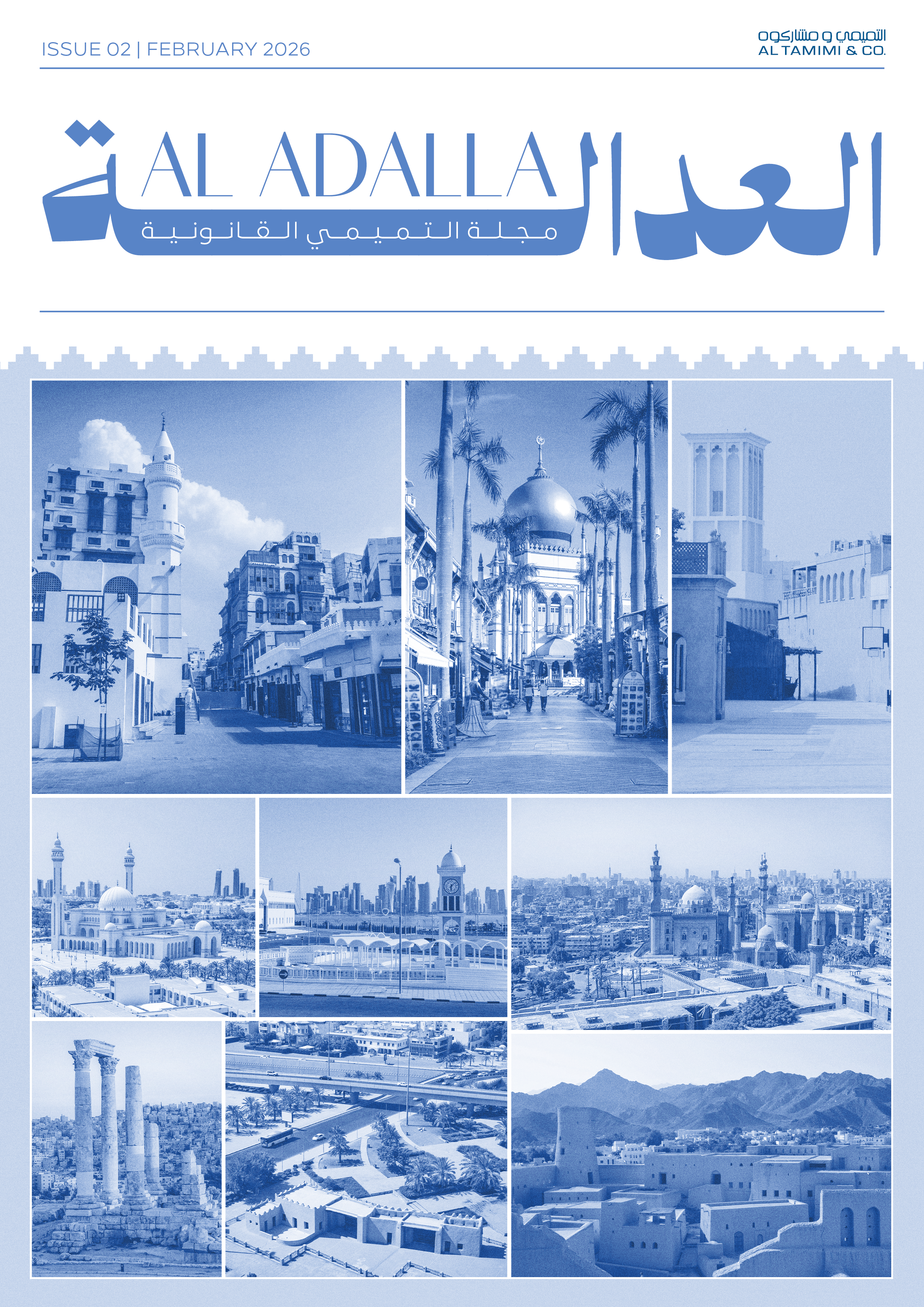
Al Adalla
Read MoreA complete spectrum of legal services across jurisdictions in the Middle East & North Africa.


A New Framework for a Maturing Real Estate Market
Qatar introduces its comprehensive Owners’ Associations Law
Law No. 11 of 2026 Concerning Owners’ Associations (the “Law”), issued on 2 September 2026, establishes Qatar’s first comprehensive statutory framework for the governance of jointly owned properties. For real estate developers, the Law is not a background compliance item – it is a regime that will directly shape how projects are structured, sold, managed, and handed over. Developers who engage with its requirements early will be better positioned; those who delay risk statutory enforcement action, operational disruption, and reputational damage.
Qatar’s jointly owned property sector – towers, gated communities, and mixed-use developments held by dozens or hundreds of separate owners – has until now been governed by a patchwork of older legislation, including Law No. 4 of 1985, the Civil Code (Law No. 22 of 2004), Law No. 29 of 2006, Law No. 6 of 2014 (as amended by Law No. 5 of 2023), and Law No. 24 of 2017. The Law consolidates and modernises the rules applicable to owners’ associations, giving them a detailed statutory identity for the first time. It is administered by the General Authority for the Regulation of the Real Estate Sector (“Aqarat”), established under Emiri Decision No. 28 of 2023 and sitting under the Ministry of Municipality. Throughout this article, references to “the Competent Department” and “the Authority” in the Law mean the relevant unit within Aqarat.
For developers, the stakes are straightforward. Jointly owned buildings only function well when there is clarity about who pays for what, who decides what, and what happens when someone does not comply. Historically, ambiguity in these areas has generated disputes over unpaid service charges, inconsistent maintenance standards in common areas, and unclear governance – disputes in which developers are frequently named. The Law is designed to close those gaps, but in doing so it imposes obligations on developers that go well beyond the construction phase.
Scope and Concepts
The Law applies to all jointly owned properties, whether built, under construction, or not yet built. Limited exemptions exist for government buildings used entirely for administrative purposes, hotel and tourism establishments regulated under tourism law, and any other buildings the Council of Ministers designates as exempt. Developers should assume their projects are in scope unless a specific exemption applies.
An Owners’ Association must be established once a jointly owned property has three or more owners of subdivided units – and the developer or plot owner is counted as an owner where it holds at least three unsold units. The same requirement applies to real estate complexes comprising multiple properties, and the Law permits a single Association to cover more than one property. Crucially, the Association acquires its own legal personality and independent financial liability once registered with Aqarat, meaning it can hold funds, enter contracts, and sue and be sued in its own name.
Registration of the Owners’ Association with Aqarat is not optional. An application must be submitted to Aqarat, which has fifteen days to decide (with silence treated as an implicit rejection). A rejected applicant may escalate to the Minister within thirty days, and the Minister’s decision is final. Where owners fail to organise themselves, Aqarat may appoint a temporary Board of Directors, with all unit owners automatically becoming members – a regulatory fallback, not a planning assumption, and one that developers should avoid triggering through early and proactive engagement.
Governance, Finance, and Enforcement: The Framework Developers Will Operate Within
Governance structure. Each Association is run by a Board of Directors – chairman, vice-chairman, treasurer, and additional members – elected by the General Assembly. The Chairman manages day-to-day affairs, handles Aqarat registration, and represents the Association before courts and third parties. Board members with a conflicting interest must disclose it and abstain from voting, with a breach carrying a fine of up to QAR 50,000 and doubled for repeat offenders.
The General Assembly – comprising all owners, retains ultimate authority. It elects and removes the Board, approves the Articles of Association and amendments, appoints the auditor, and approves the annual budget. No single owner’s voting share may exceed 50% of total votes, regardless of unit count. This cap directly constrains developers holding large residual portfolios. Developers and plot owners are also barred from voting on contracts in which they have an interest, or on decisions to pursue them for breach of their own obligations.
Financial obligations and enforcement. Owners must pay annual service charges and maintenance expenses, comply with Board and General Assembly decisions, notify the Association of ownership changes, and avoid damaging common areas. Where an owner fails to meet these financial obligations, the Law provides a structured enforcement process. After two written notices, late payment charges apply; if payment remains outstanding for three consecutive months, the Board may ask Aqarat to disconnect utilities (subject to a grievance process). The Board also holds a statutory lien over a defaulting owner’s unit – ranked from registration and exempt from usual lien fees – and the Chairman may seek a payment order from the urgent matters judge. Critically for developers, the plot owner remains liable for service charges on unsold units, and no sale or disposal may be authenticated or registered without proof that arrears have been paid.
Repairs and compensation. Owners must carry out internal repairs when failure to do so would harm others or the building. If they do not, Aqarat may carry out the repairs at the owner’s expense with a 25% surcharge, without prejudice to any criminal liability. Owners are also liable to compensate the Association for costs arising from non-compliance by themselves, their tenants, or their occupants.
For developers
The six-month compliance deadline. All parties addressed by the Law must regularise their affairs within six months of its entry into force. The Minister may grant extensions for further similar periods, but this is a statutory deadline, not guidance. While the Law does not attach a standalone fine to missing this deadline itself, non-compliance leaves developers exposed to the Law’s other consequences – including Aqarat-appointed temporary Boards or administrative managers displacing developer influence, and the ongoing risk of the QAR 50,000 fine (doubled for repeat offenders) that attaches to board conflict-of-interest breaches once governance structures are in place. Developers with multiple projects will need to establish or formalise Owners’ Associations, prepare compliant Articles of Association, open Operating Accounts, and constitute Boards of Directors across their entire portfolio within this period. This requires specialised advisory input and should be treated as a priority compliance workstream.
For existing owners and associations. Existing communities should not assume they are automatically compliant. Associations that have been operating informally, without registration, or under outdated arrangements should review their governance documents, registration status, and financial processes as a matter of urgency. Further detail on the compliance deadline and consequences of non-compliance is set out below, which applies equally to existing associations.
What Developers Need to Know
Law No. 11 of 2026 places developers at the centre of the owners’ association framework – not only during development and sales, but well into the operational life of a project. The provisions below consolidate the areas that developers should address as a priority.
Mandatory formation and the developer’s role in triggering it. An Owners’ Association must be established once a jointly owned property has three or more owners of subdivided units. The developer or plot owner is counted as an owner where it holds at least three unsold units, meaning a developer that has sold most of its units while retaining three or more unsold units will itself count toward the threshold. The same applies to real estate complexes – broadly defined as a group of jointly owned properties within a defined geographical area linked through common parts or common benefits – and the Law permits a single Association to cover more than one property. Developers should map their portfolio against these definitions early and determine which projects require Association formation, rather than waiting for Aqarat or unit owners to force the issue.
Impact on master planned developments and mixed-use communities. The Law’s definition of “Real Estate Complex” is broad, and it is possible – but unlikely – that it could be read to extend to large-scale developments; specific confirmation from Aqarat will be needed before any firmer view can be taken. Developments such as The Pearl and Lusail, and sub-communities within them – including mixed-use villa communities – might on one reading be argued to fall within scope. However, the Law does not specifically address mega master developments or city-scale communities, and nothing in its text suggests that the legislator turned its mind to that scale of development – this is genuinely an open question that the Executive Regulations and Aqarat guidance will need to resolve. Whether, and if so how, each sub-community might form its own Association, or fall under a master development Association, would in any event depend on how the properties are registered and subdivided, and on those Regulations. Developers may wish to keep a watching brief on how Aqarat approaches this question, and be ready to engage on the appropriate configuration once further clarity emerges. It may well be that Aqarat decides to exempt complexes and master communities developed by government master developers, in which case master communities like Lusail and The Pearl (including sub-communities such as Porto Arabia and Seef Lusail) would fall outside the Law’s scope. Existing Master Community Declarations and constitutions do not need immediate amendment, but developers should keep them under review as the position becomes clearer.
Articles of Association – template, customisation, and penalty mechanisms. Each property or group of jointly owned properties must have Articles of Association prepared using a template published by Aqarat. Developers may add special provisions, provided they are consistent with the Law and its Executive Regulations, but any amendment requires Aqarat’s prior approval – a step that developers should factor into their project timelines from the outset. The Law also allows the Association, with Aqarat’s approval, to include in the Articles a mechanism for imposing financial obligations on any owner whose actions have increased costs to the Association. This is a valuable tool for developers drafting the initial Articles, as it enables cost-recovery penalties for nuisance or damaging behaviour to be embedded from the start, helping to protect property standards across the development.
Enforcement powers and their impact on developers. The Law gives the Association significant enforcement powers to collect unpaid service charges from all owners – including developers. If payment remains outstanding for three consecutive months, the Board may request Aqarat to disconnect utilities, subject to a grievance process. The Board also holds a statutory lien over a defaulting owner’s unit, enforceable through an expedited payment order. These tools work both ways: while they help ensure that individual unit owners pay their share, they apply equally to developers in respect of unsold units on which the plot owner remains liable for service charges. Developers should therefore ensure that their own service charge obligations on unsold stock are current, while recognising that the same enforcement framework strengthens overall collection across the development.
Voting restrictions and the 50% cap. No single owner’s voting share may exceed 50% of total votes, regardless of unit count. A developer holding 80% of units is still capped at 50% of votes. Developers have in certain circumstances relied on bulk voting rights derived from unsold stock to maintain control during the formation stage of an association, including over the appointment of managers and approval of service contracts – that path is now restricted. Developers should factor this constraint into governance planning and sales strategy. Additionally, developers are barred from voting on contracts in which they have an interest, and from voting on decisions to pursue them for breach of their obligations.
Conflict of interest and related party transactions. Board members must disclose any conflict of interest and abstain from voting on conflicted matters, with breach carrying a fine of up to QAR 50,000 (doubled for re-offence). For developers whose affiliated owners’ association management companies or facilities management companies service the development – a common arrangement in large scale projects – this creates a significant compliance issue. The Law provides no automatic exemption for developer affiliated management entities. The only route to exemption would be a Council of Ministers decision under Article 2(3), which is discretionary and cannot be assumed. Developers should review existing management arrangements and ensure that relevant Board members abstain from voting on contracts with affiliated entities.
Appointing owners’ association management companies and facilities management companies. An important distinction exists between two types of professional service providers. Owners’ association management companies act as delegates of the Board, exercising governance and administrative functions on its behalf. Facilities management companies are responsible for physical maintenance and upkeep of the building and common areas. The Board may delegate the Chairman’s management functions to another person (the mechanism for appointing an owners’ association management company), and may separately contract with persons of sufficient expertise to fulfil the Association’s obligations (covering facilities management companies). Both categories require licensing and approval by Aqarat, even though the appointment decision rests with the Board.
Hotel apartments, branded residences, and the tourism exemption. The law exempts hotel and tourism establishments subject to the law regulating tourism. This exemption is narrow and targets actual hotel operations. Branded residences – residential units with licence agreements with commercial brands – are not hotels and would not ordinarily fall under tourism legislation. Developers of branded residence projects should therefore assume that these properties are subject to the law. This has practical consequences: the voting cap, conflict-of-interest restrictions, and General Assembly oversight imposed by the law may make it difficult for developers to maintain the brand standards required under their licence agreements with brand owners. Developers in this position should seek early clarification from Aqarat on how the law applies to branded residences, and should manage expectations with their brand partners on the potential impact of the new regime on existing and future brand licensing arrangements.
Dissolution of the Association. The Association dissolves if the number of owners falls below three. Upon dissolution, the General Assembly and Board are also dissolved, and the legal procedures for settling the Association’s rights and obligations must be followed per the Executive Regulations. This is most relevant where one party acquires all or nearly all units. Developers engaged in buy-back or consolidation strategies should be aware that reducing the owner count below three triggers dissolution and a winding-up process.
Regulatory oversight – the Ministry of Municipality and Aqarat. The Law falls under the Ministry of Municipality, not the Ministry of Justice. Aqarat reports to the Minister of Municipality and grievances under the Law go to that Minister. Developers should direct all compliance, registration, and regulatory engagement to Aqarat.
Administrative manager – the consequence of non-compliance. Where an Owners’ Association fails to fulfil its obligations, Aqarat may appoint an administrative manager for a specified period. This appointment automatically vacates all positions on the Board of Directors, and the administrative manager assumes all Board powers. While the language of the law is broad enough to cover circumstances beyond simple non-compliance – “whenever circumstances so require and as the public interest may dictate” – the provision is primarily aimed at failing associations. Developers should treat this as a significant risk to be avoided through proactive compliance, not a backstop to be tested.
Implications for Other Stakeholders
For buyers. Due diligence on any unit purchase should now routinely include confirming the unit’s standing with its Owners’ Association. Since a sale cannot be authenticated without proof that arrears have been paid, buyers and their lawyers should request this confirmation early. Buyers inherit the seller’s obligations toward the Association, so reviewing the Association’s financial health and any outstanding liens is essential. Many of the developer-focused provisions discussed below also bear directly on what buyers should expect at handover and beyond.
Looking Ahead
The Law was issued with reference to Aqarat and expressly builds on Law No. 6 of 2014 regulating Real Estate Development (as amended), linking owners’ association governance directly to the licensing and conduct rules already applicable to developers. Where the Law is silent, the Civil Code continues to apply. The Council of Ministers is tasked with issuing Executive Regulations covering practical mechanics – including how proportionate ownership shares are calculated, election procedures, and the precise controls governing utility disconnection and lien registration. Developers should monitor for these Regulations closely, as much of the Law’s day-to-day operation will depend on them.
Law No. 11 of 2026 represents a step change in how shared residential and commercial real estate is governed in Qatar. For developers, it demands early engagement, portfolio-wide compliance planning, and a willingness to adapt existing management and governance arrangements to a more prescriptive regulatory environment.
Final Recommendations
The six-month compliance deadline is firm, and the consequences of inaction – regulatory intervention, loss of governance control through an Aqarat-appointed Board or administrative manager, and exposure to fines once governance structures trigger the Law’s conflict-of-interest provisions – are real. Developers would be well advised to begin their compliance workstream now. Given the breadth and complexity of the Law’s requirements, early engagement with specialist legal advisers is essential. Al Tamimi & Company is one of the region’s leading firms for advising on strata and jointly owned property matters, with dedicated real estate resources based in Qatar, and is ideally placed to advise developers, owners, and associations on the Law’s impact, ensure compliance, and mitigate risk.
Key Contacts
 a.thomson@tamimi.com
Spread the news


Stay updated
To learn more about our services and get the latest legal insights from across the Middle East and North Africa region, click on the link below.