



Find a Lawyer
Book an appointment with us, or search the directory to find the right lawyer for you directly through the app.
Find out more

The Technology Issue
Decoding the future of law
This Technology Issue explores how digital transformation is reshaping legal frameworks across the region. From AI and data governance to IP, cybersecurity, and sector-specific innovation, our lawyers examine the fast-evolving regulatory landscape and its impact on businesses today.
Introduced by David Yates, Partner and Head of Technology, this edition offers concise insights to help you navigate an increasingly digital era.


2025 is set to be a game-changer for the MENA region, with legal and regulatory shifts from 2024 continuing to reshape its economic landscape. Saudi Arabia, the UAE, Egypt, Iraq, Qatar, and Bahrain are all implementing groundbreaking reforms in sustainable financing, investment laws, labor regulations, and dispute resolution. As the region positions itself for deeper global integration, businesses must adapt to a rapidly evolving legal environment.
Our Eyes on 2025 publication provides essential insights and practical guidance on the key legal updates shaping the year ahead—equipping you with the knowledge to stay ahead in this dynamic market.
A complete spectrum of legal services across jurisdictions in the Middle East & North Africa.


Saudi Arabia’s Energy Evolution: What Investors Need to Know Now
 7 min 10 sec
Saudi Arabia is executing one of the most consequential energy sector overhauls globally. The Kingdom is preserving market leadership in oil and gas while advancing a diversified power system anchored in gas, grid reliability, and incremental renewables.
The legal and regulatory architecture has accelerated markedly since 2019, with a modern Electricity Law, a new Investment Law effective 2025, strengthened environmental regulation and enforcement, expanding public–private partnership (PPP) frameworks, and targeted work on hydrogen certification, carbon markets, and methane controls.
For investors, lenders, and sponsors, the opportunities are expanding beyond utility-scale renewables into grid, storage, carbon capture, hydrogen, desalination, and efficiency — supported by increasingly predictable procurement, licensing, and offtake regimes.
This update briefly highlights a few commercially relevant ongoing developments for the Kingdom’s energy framework, focusing on the strategic signals that matter for projects and transactions.
Five strategic takeaways
Saudi Arabia’s energy sector remains anchored in oil and gas, with measured expansion in gas, power system reliability, and selected alternative fuels.
- Against this backdrop, hydrocarbons remain the backbone of the energy economy. The Saudi Arabian Oil Company (Aramco) is central to supply security and export strategy, with ongoing upstream investment, associated gas development, and reliability-focused brownfield upgrades across production and processing. Policy initiatives on methane, flaring, and efficiency continue to shape project design and operations.
- Renewables are increasingly a system integration question rather than a tariff story. Record-low bids established credibility. The emphasis has moved to bankable procurement cycles under the Renewable Energy Project Development Office (REPDO); integration with the single-buyer model via the Saudi Power Procurement Company (SPPC); and grid readiness, storage, and industrial offtake, with the Public Investment Fund (PIF) acting as a strategic anchor.
- Hydrogen and ammonia are being increasingly assessed for scale up, with early projects informing offtake and financing structures. Illustrative structures include long-term offtake backed by industrial users and export conversion. The emerging hydrogen framework may formalise certification, safety, transport, and export logistics, with “blue” routes linked to carbon capture, utilisation, and storage (CCUS) hubs and “green” routes tied to utility-scale solar and wind.
- Environmental law now appears to influence capital allocation. The 2020 Environment Law (Royal Decree M/165) and its implementing rules require environmental impact assessments (EIAs); set binding air and water emission limits; mandate continuous self‑monitoring and reporting; and empower the National Center for Environmental Compliance (NCEC) to levy fines of up to Saudi riyal (SAR) 20 million, suspend or cancel permits, and order remediation. The NCEC has been active on inspections and enforcement. This has sharpened environmental, social and governance (ESG) scrutiny by lenders and sponsors across power, water, and industrial projects.
- The investment gateway is, in our experience, opening wider. The new Investment Law, effective 2025, entrenches equal treatment for domestic and foreign investors, simplifies entry, and supports special economic zone (SEZ)-enabled localisation. Together with the Private Sector Participation Law (PSP Law) and sector unbundling, this is broadening private participation across generation, water, efficiency, and soon, hydrogen value chains.
Regulatory highlights shaping the market
The Electricity Law modernised the sector and underpins unbundling, private participation and tariff rationalisation. The establishment of the Saudi Power Procurement Company as a neutral single buyer gives independent generators a predictable interface and is foundational to the next phase: staged market liberalisation toward wholesale competition.
In hydrocarbons, the Hydrocarbon Law (Royal Decree M/37, 2017) requires ministerial licences for exploration and production, and imposes conservation and safety obligations (including controls on flaring and leakage) and incident reporting to the Ministry of Energy.
The Gas Supplies and Pricing Law (Royal Decree M/36, 2003, as amended) mandates licences for gas processing, transport and distribution, sets technical standards and third‑party access, and provides for licence suspension or revocation for breaches.
The Law of Trade in Petroleum and Petrochemical Products (Royal Decree M/139, 2025) requires permits for the use, sale, storage, transport, import or export of petroleum products and allows cancellation of permits and blacklisting for diversion or misuse.
The new Investment Law replaces the 2000 regime and, from 2025, removes friction by simplifying registration, codifying equal treatment and repatriation, and providing clearer guardrails on foreign ownership and incentives. Combined with the revised Companies Law, it streamlines joint venture (JV) and project company structures common in energy transactions.
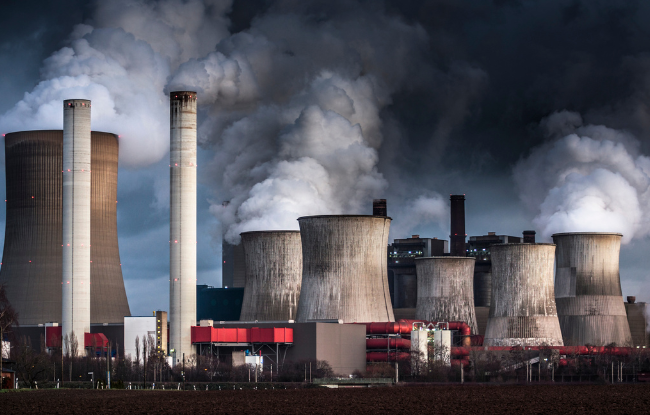
Environmental regulation has reset the baseline for project feasibility. Mandatory EIAs, binding air and water quality limits, and self‑monitoring and reporting obligations now sit alongside explicit enforcement tools (administrative fines of up to SAR 20 million, suspension or cancellation of permits, and remediation orders). Waste management requirements under the Waste Management Law (Royal Decree M/3, 2021) and the circular carbon economy focus are inducing investment in CCUS and low‑carbon fuels.
Gas policy reform and the Jafurah programme signal a structural shift in power and industry feedstock. The amended gas distribution regime and infrastructure prioritisation are displacing oil burn in power, freeing liquids for higher-value export and supporting petrochemicals integration.
Procurement for renewables has, it seems, also increasingly matured. REPDO’s auction programme has progressed from pathfinding (Sakaka and Dumat Al Jandal) to scale (Sudair and successive rounds), with standardised PPAs, transparent processes, and bankable risk allocation. Rooftop and commercial and industrial (C&I) net metering frameworks are enabling decentralised adoption, though grid integration and metering readiness remain execution variables.
Projects and platforms to watch
Against this regulatory backdrop, several project categories merit attention in our view.
- Upstream gas and liquids. Continued development of non‑associated gas, associated gas recovery and related midstream processing remains a priority for fuel-switching in power and feedstock supply to industry. Licensing and operations are governed by the Hydrocarbon Law (M/37, 2017) and the Gas Supplies and Pricing Law (M/36, 2003, as amended), which require activity‑specific licences (including for pipelines and processing), prescribe technical and safety standards, and allow regulatory action for non‑compliance. Brownfield de-bottlenecking and enhanced recovery programmes, together with drilling and services localisation, are notable execution themes.
- Carbon markets. The voluntary market is in place; the next step is a robust registry, anti-double counting rules, and potentially binding obligations for heavy emitters in the later 2020s. Early movers are structuring projects to generate credible credits, including methane abatement and nature-based solutions aligned with domestic standards.
- Power market liberalisation. A roadmap is anticipated for a pilot wholesale trading environment, creating a path from single-buyer offtake to competitive procurement and, eventually, limited retail choice for large users. This may reward efficient generators, storage operators, and flexible demand aggregators, while shifting risk pricing in PPAs over time.
- Water-energy nexus. The Kingdom’s desalination efficiency metrics and the continued privatisation of independent water project (IWP)/independent water and power project (IWPP) assets show water as an investable energy-adjacent sub- Integration of renewables and storage into water projects is a continuing area of innovation.
- Early large-scale proposals provide reference points for multi‑gigawatt (GW) inputs, long-term offtake, and export via ammonia or pipeline where feasible. The forthcoming hydrogen framework is expected to codify guarantees of origin, safety, storage, and transport standards, and potentially incentives, enabling replication across industrial clusters.
- CCUS hubs. The east coast sequestration programme and industrial capture at Jubail and Yanbu indicate a cluster model aligned with petrochemical and refining value chains. Expect detailed liability, monitoring, and pore-space rules to emerge as capture volumes scale.
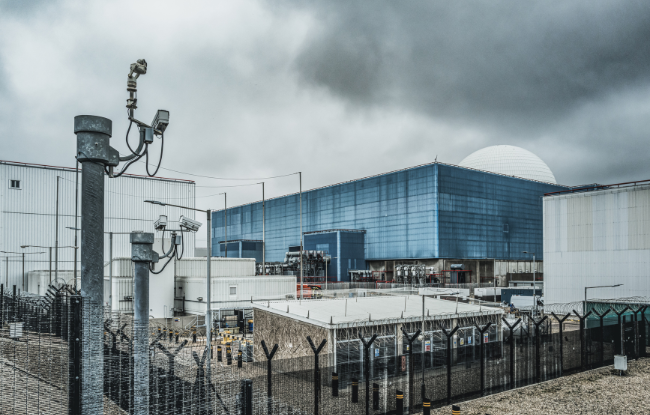
- Nuclear development may also accelerate as the Kingdom advances its civil nuclear programme, including site selection, regulatory maturation under the Nuclear and Radiological Regulatory Commission (NRRC), and ongoing negotiations with technology vendors. Early frameworks and long-term offtake structures are likely to shape bankability considerations for first-wave projects.
Transactional implications
Generally, local content and capability building remain central. The Kingdom’s Vision 2030 priorities require early planning for supply chain localisation, workforce development, and technology transfer. Structuring around SEZ incentives and domestic manufacturing — particularly for solar, wind components, and hydrogen equipment — may materially improve project economics.
In the power sector, the combination of neutral single buyer-tested power purchase agreement (PPA) templates and sovereign support mechanisms has supported lending. We anticipate grid and system services may be a developing area. As renewable penetration rises, opportunities may expand for utility-scale storage, grid reinforcement of engineering, procurement, and construction (EPC) contracts, synchronous condensers, advanced energy management systems (EMS), and ancillary services.
Hydrogen offtake structuring may also differentiate projects. We would expect that bankable offtake may likely hinge on creditworthy long-term buyers (industrial users or traders), robust certification, and transport optionality (pipeline vs. ammonia shipping). Portfolio developers may also consider integration benefits with gas and power assets.
ESG diligence also remains a major ongoing theme. Projects that plan for environmental compliance from the outset — such as through design, monitoring and digital measurement, reporting and verification (MRV) – may also enable broader lender participation and support from local regulatory authorities.
Written by

 t.calvert@tamimi.com
 View LinkedIn Profile
The 2020 Environment Law (Royal Decree M/165) and its implementing rules require environmental impact assessments, set binding air and water emission limits, and mandate continuous self‑monitoring and reporting.
What’s next: Near-term outlook
Generally, we expect that the Ministry of Investment will issue further regulations and guidelines to further clarify incentives, sensitive sectors, and fast‑track pathways for strategic energy projects.
Hydrogen regulations and certification schemes are also likely to take greater shape as early flagship projects move toward commissioning. This may allow developers to make credible low-carbon export claims into the EU and Asian markets, where conformity with evolving carbon-intensity standards will be essential.
The gradual evolution of the electricity sector toward a pilot wholesale market will require new trading rules, settlement systems, prudential safeguards, and market-monitoring arrangements. These reforms may shift merchant risk appetite and could encourage hybrid PPA-merchant structures for the strongest assets. Nuclear development may also accelerate as the Kingdom advances its civil nuclear programme.
Rules on methane management and flaring are expected to tighten further. Routine flaring reduction, leak-detection-and-repair (LDAR) obligations, and emissions-intensity reporting are already a policy priority, which will drive deployment of advanced detection technologies, gas-recovery systems, and performance-linked operations and maintenance (O&M) or EPC service models across upstream and midstream assets.
More broadly, environmental standards are likely to converge toward international benchmarks, prompting retrofits, technology upgrades, and more rigorous permitting obligations for industrial facilities as the National Environmental Compliance Program continues.
To succeed, investors may need to approach opportunities with careful preparation, a clear understanding of local legal frameworks and market dynamics, and flexibility in meeting localisation, compliance, and sustainability requirements.
Next Article













Written by